

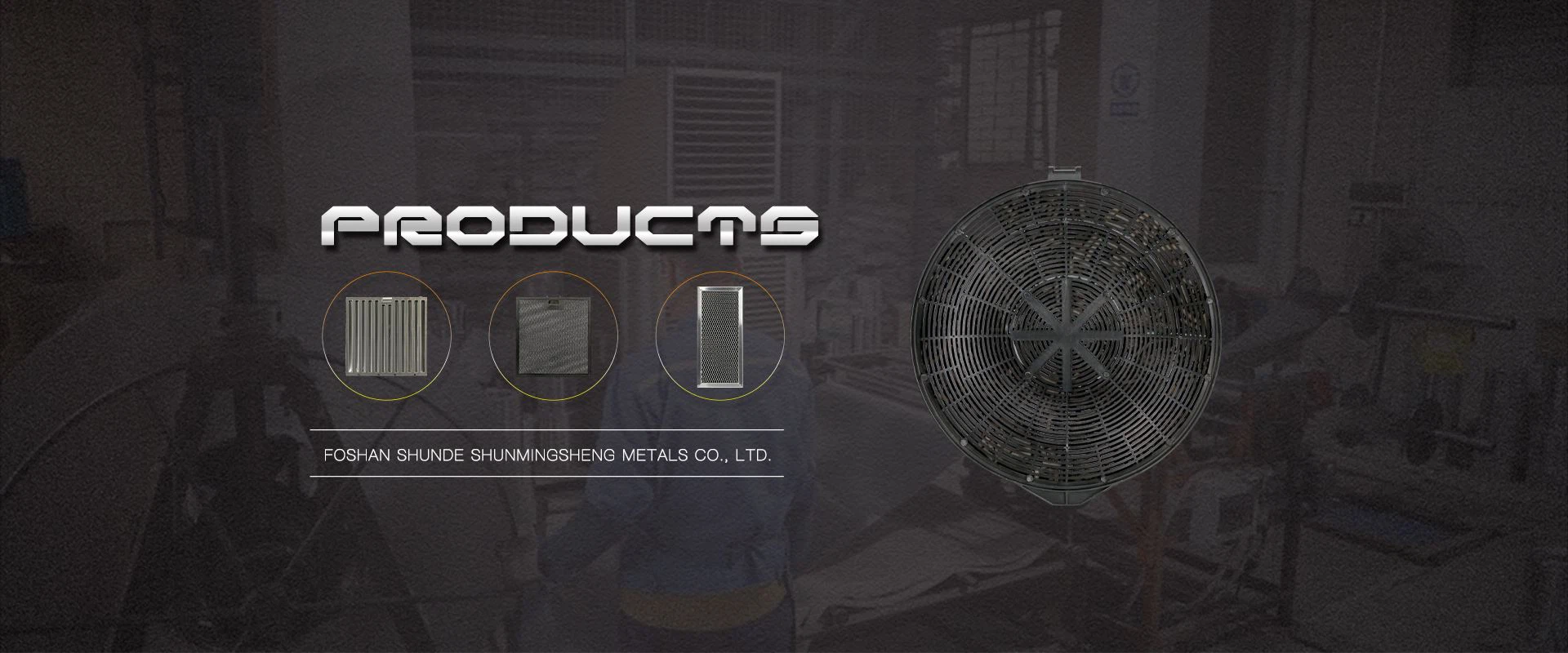
Activated Carbon Filter
Shunmingsheng: Your Reliable Activated Carbon Filter Manufacturer!
Foshan Shunmingsheng Metals Co., Ltd is a developer and manufacturer of various filters. Our company was established in 2003. Our main products include air purification filters, photocatalyst filters, HEPA filters, filters, stainless steel baffles, honeycomb filters, etc. These filters support mass production and supply 3-5,000 pieces per month. They have been tested from the injection molding of parts to the whole production process, which ensure delivery within 14 days after receiving the deposit.
Rich Experience
Our team has over 20 years of experience in filter design and production. We have been providing customers with professional product guidance, including installation, cleaning and maintenance skills.
Quality Assurance
All our filters are produced, individually tested and certified in controlled environments in ISO-9001 certified factories and have obtained certifications according to CE, TRBA, BGR, ISO and EN.

Rich Product Range
Our product specifications are diverse, including range hood parts and various activated carbon filters, nano-silver filters, cold catalytic filters, corrugated filters, PP washable filters, which are used in various fields such as homes, restaurants, hotels, etc.
Customized Services
Our filters have a number of innovative patents, and we also provide you with customized services in terms of materials, finishes, coatings and sizes, including OEM orders.
-
![Carbon Filter Price]()
-
![Hood Charcoal Filter Replacement]() Hood Charcoal Filter Replacementwe are a factory The Ultimate Solution for Enhancing Kitchen Air Quality!read more
Hood Charcoal Filter Replacementwe are a factory The Ultimate Solution for Enhancing Kitchen Air Quality!read more -
![Replacement Carbon Filter For Cooker Hood]() Replacement Carbon Filter For Cooker Hoodcustom size activated carbon filter for range hoodread more
Replacement Carbon Filter For Cooker Hoodcustom size activated carbon filter for range hoodread more -
![Granular Activated Carbon Uses]() Granular Activated Carbon Usesactivate carbon filter for range hood We are a factory manufacturer.read more
Granular Activated Carbon Usesactivate carbon filter for range hood We are a factory manufacturer.read more -
![Cotton Filter]()
-
![Activated Carbon Filter Efficiency]() Activated Carbon Filter Efficiencyactivated carbon filter for range hood we are a factory manufacturerread more
Activated Carbon Filter Efficiencyactivated carbon filter for range hood we are a factory manufacturerread more -
![Activated Carbon Filter Price]()
-
![Kitchen Hood Charcoal Filter]()
-
![Carbon Filter Filter]()
-
![Charcoal Chimney Filter]()
-
![Charcoal Filter Chimney]()
-
![Carbon Filter Kitchen Hood]()


What is Activated Carbon Filter
Activated carbon has special properties that allow it to remove volatile organic compounds (VOCs), odors, and other gaseous pollutants from the air. It accomplishes this in a way that is different from other air purifiers like HEPA that only filter particle pollution from the air. Carbon filters use ad-sorption, not ab-sorption. The key difference here is that during adsorption the pollutants stick to the outside of the carbon. When a molecule of some gaseous substance comes through the carbon, provided there is an open adsorption site, airborne gaseous chemicals (specifically volatile organic chemicals, or VOCs) stick the surface of carbon air filters until the filter surface is fully saturated.
Features of Activated Carbon Filter
Wide Uses
Made from charcoal-impregnated polyester media sandwiched between 2 layers of galvanized steel, our activated carbon filters are compatible with different kitchen appliances and are used in ducted and non-ducted range hoods, microwaves, bathroom fans.
Eco Friendly
When installed in a range hood, these filters cannot be cleaned after use and have a service life of 6-12 months. However, most of their materials are recyclable, which can reduce environmental pollution.
Efficient Cleaning
Our filters use advanced filtration technology with high grease absorption and filterability to efficiently remove dust, lint, smoke, benzene and other volatile organic compounds, leaving your home with fresh, breathable air .
Customizable
They come in a variety of specifications and are available in different materials, thicknesses and structural layers. They can also be cut to size and customized according to your needs.
Application of Activated Carbon Filter
Industrial wastewater contains many organic compounds, harmful chemicals, odours, and other impurities that need effective filtration. Water treatment plants use activated charcoal filters for removing contaminants from industrial wastewater. The porous structure helps in removing inorganic and synthetic organic chemicals. Using the thermal and chemical activation method, you can enhance the absorption capacity of the carbon.
Besides sewage treatment plants, activated carbon filters have also found usage in air and gas purification. Smokes, odours, and other volatile pollutants require a robust filtration solution that doesn’t result in outgassing. The filters help to trap volatile gas molecules on a bed of charcoal and remove them from circulation. The porous surface act as a sponge for absorbing harmful gases. They also help absorb hydrocarbons, oil vapours, random, and other harmful components for purifying the air circulation.
Because of high absorption and large surface area, activated carbon filters assist in broad industrial applications, including analytical chemistry, metal finishing, groundwater remediation, and many more. They also assist in purifying organic molecules and chemicals by removing turbidity. Most pharmaceutical and chemical processes require catalysts for chemical synthesis. With greater surface area, high inertness, and versatility, activated carbon filters act as a suitable carrier for precious metals and other catalyst applications.
Drinking water treatment uses a combination of coagulation, sedimentation, and filtration for providing safe water to the public. Water purification is a critical function of activated charcoal. The physical process of absorption makes impurities stick to the surface of the material. Furthermore, these filters offer better results than sand filters in removing worrisome compounds in municipal water. These compounds include chlorine, heavy metals, byproducts, and other volatile microorganisms.
In the manufacturing of distilled beverages such as whiskey and vodka, activated carbon filters help filter organic components. Just as in sewage treatment plants, the filters enhance the taste, odour, and colour of the beverage. Furthermore, they can also assist in the manufacturing of juices and fruit-based beverages for better texture and fermentation process.
How to Correctly Use an Activated Carbon Filter
Carbon air filters can be an important part of your home air purification system, but they have to be used correctly.
Make Sure it Uses Enough Carbon
Some filters claim to be activated carbon filters, but they use only a trace of carbon. These will not be effective because they become saturated almost immediately. A rough guideline is that a good activated carbon air filter uses at least five pounds of carbon–of course, not all carbon is created equal, and some may have more binding sites (and saturation capacity) than others. But, generally speaking, the more carbon used, the more effective it can be because there will be more sorption sites to stick to.

Air Flow is Vital
To remove the most pollutants possible from the air, the air needs to spend the maximum possible amount of time passing through the carbon. In the air filter industry, this is known as “dwell time.” A filter with a good amount of carbon of sufficient thickness and high dwell time is going to be far more effective than a filter with a thin layer of carbon.
Change Your Carbon Filter
Once the carbon becomes saturated, it loses all effectiveness as an air filter. It is imperative that you change it out for a fresh carbon filter when this happens. The problem is that there is not a perfect method of knowing when carbon is saturated. Sometimes you will notice the smell; sometimes you will not. You can follow the manufacturer’s guidelines and change it on a regular basis, although this is just a rough estimate. The carbon becomes saturated depending on how heavily it is used and the amount of pollutants it is exposed to. Replacing carbon filters is a costly investment, but a monthly replacement schedule is a good starting point.
Please note that according to the EPA, gas-phase filters, like activated carbon, cannot readily remove carbon monoxide in homes, and employing other important steps, like having a carbon monoxide detector, must be used to prevent exposure.
Advantages and Disadvantages of Activated Carbon Filter
Advantage
Natural Filter Media: Activated carbon is made from natural materials like coconut shell and wood, with no other substances or chemicals needed. This means that air or water can be filtered completely safely and naturally.
Easy and Low-Cost to Maintain: Activated carbon is one of the most affordable filtration materials and requires limited maintenance. When an activated carbon filter has reached its capacity, the filter simply needs to be replaced.
Removes Bad Tastes and Odors: No other affordable filtration technique is as effective as activated carbon at removing bad tastes and odors from air and drinking water.
Tackles a Range of Impurities: Aside from taste and odor, activated carbon effectively filters other organic chemicals, pollutants, gases, and microorganisms, depending on its application.
Disadvantages
Can’t Remove all Contaminants: Activated carbon is highly effective at removing a set group of contaminants, but it can’t be used to completely purify air and water. Some chemicals and pollutants aren’t attracted to carbon media, which means other filtration techniques may be needed.
Short Lifespan: An activated carbon filter has a maximum filter capacity (the maximum amount of contaminants that can be trapped in the media until the media is eventually fully clogged). When this maximum capacity is reached, the filter stops working and needs to be replaced. The average lifespan of an activated carbon filter is between 2 and 6 months, depending on the filter’s size and the contaminants in the treated air or water.
Requires Long Contact Times: The longer the contact time between the filter and the air or water, the more effective the filtration. This may mean waiting several minutes for filtration results.
May Harbor Bacteria: Activated carbon can’t be used to remove viruses and bacteria - and, in fact, this filter type is known to harbor bacteria. Manufacturers can prevent bacteria growth by adding trace amounts of materials like silver to the filter media.
Factors Decide the Performance of Activated Carbon Filters
Material
The first factor is the type of material used in the filter. Different materials provide different levels of filtration and performance, so it’s important to understand the pros and cons of each type. Some of the most common materials used in activated carbon filters are granular activated carbon, black carbon, and powdered carbon.
Filter Source
The most popular kind of filter media, granular activated carbon (GAC), is composed of tiny, highly porous particles. This helps the filter capture and remove impurities from water, resulting in cleaner, clearer water.
Block carbon filters are made up of compressed carbon blocks, which offer higher levels of filtration than GAC. Powdered carbon is a more finely ground version of GAC, and is ideal for removing smaller particles from the water.
Size of Filter
The size of the filter should be taken into account when selecting an activated carbon filter. The size of the filter will determine how much water it can filter and how quickly it will filter it. Smaller filters are ideal for smaller water sources, while larger filters are better suited for larger bodies of water.
Shelf Life of Product
Finally, it’s important to consider the filter’s lifespan. Activated carbon filters are designed to be replaced periodically, so it’s important to choose one with a long lifespan. Depending on the type and size of the filter, it should last for several months or even years.
How to Choose the Activated Carbon Filters
Ensure the Strength of the Block on the Exterior
When it comes to selecting an activated carbon filter for your home, it is important to ensure that the filter has a strong block on the exterior. This will help prevent any impurities from entering your cooker.
Another crucial step is to take the filter’s size into account. The filter’s ability to remove pollutants increases with its size. It’s crucial to take the filter’s construction into account as well. Carbon filters are commonly made from carbon blocks, granular activated carbon, or a combination of both.
Examine the Source of Activated Carbon
Activated carbon is made from various sources including coconut shells, coal, and wood. Each type of carbon has different levels of effectiveness at removing impurities, making it important to consider the source of the carbon used in the filter.
Coconut shells are a popular source of activated carbon, makes them an effective choice for filtering out chlorine, pesticides, and other contaminants.
Coal-based carbon filters are also effective but can leave behind more impurities than coconut shell-based filters. Wood-based carbon filters are the least effective of the three.
Never Underestimate the Iodine Value of Your Activated Carbon Filter’s Block
The iodine value of your activated carbon filter’s block is the measure of how well the filter can remove impurities. The higher the iodine value, the more effective the filter will be at removing contaminants.
The iodine value of the block filter is determined by the size and type of carbon particles in the filter. The smaller the particle size, the higher the iodine value and the more effective the filter will be at removing impurities.
The higher the iodine value, the more effective the filter will be at removing even the smallest particles, like heavy metals and organic compounds.
Certificate Photo

FAQ
Q: What is the purpose of activated carbon in a filter?
Q: Do carbon filters remove grease?
Q: How does the activated carbon work?
Q: Do you need activated carbon in your filter?
Q: What are the benefits of GAC filter?
Q: What does a carbon filter do?
Q: What is a range hood filter and how do I clean it?
Q: Does a carbon filter remove grease?
Q: Why are carbon filters better?
Q: What does carbon filter remove?
Q: Is A carbon filter necessary?
Q: Do carbon filters remove carbon?
Q: How do I choose a grease filter?
Q: How long do carbon filters last?
Q: What is the difference between grease trap and grease separator?
Q: Do carbon filters make a difference?
Q: Does carbon filter remove heavy metals?
Q: How do you calculate carbon filter?
Q: Does a carbon filter remove salt?
Q: Are carbon filters sustainable?
As one of the leading activated carbon filter manufacturers in China, we warmly welcome you to buy high-grade activated carbon filter for sale here from our factory. All customized products are with high quality and low price. For free sample, contact us now.
Oil Aluminum Grease Mesh Filter, Kitchen Microwave Oven Grease Filter, Range Hood Stainless Steel Grease Baffle Filter