

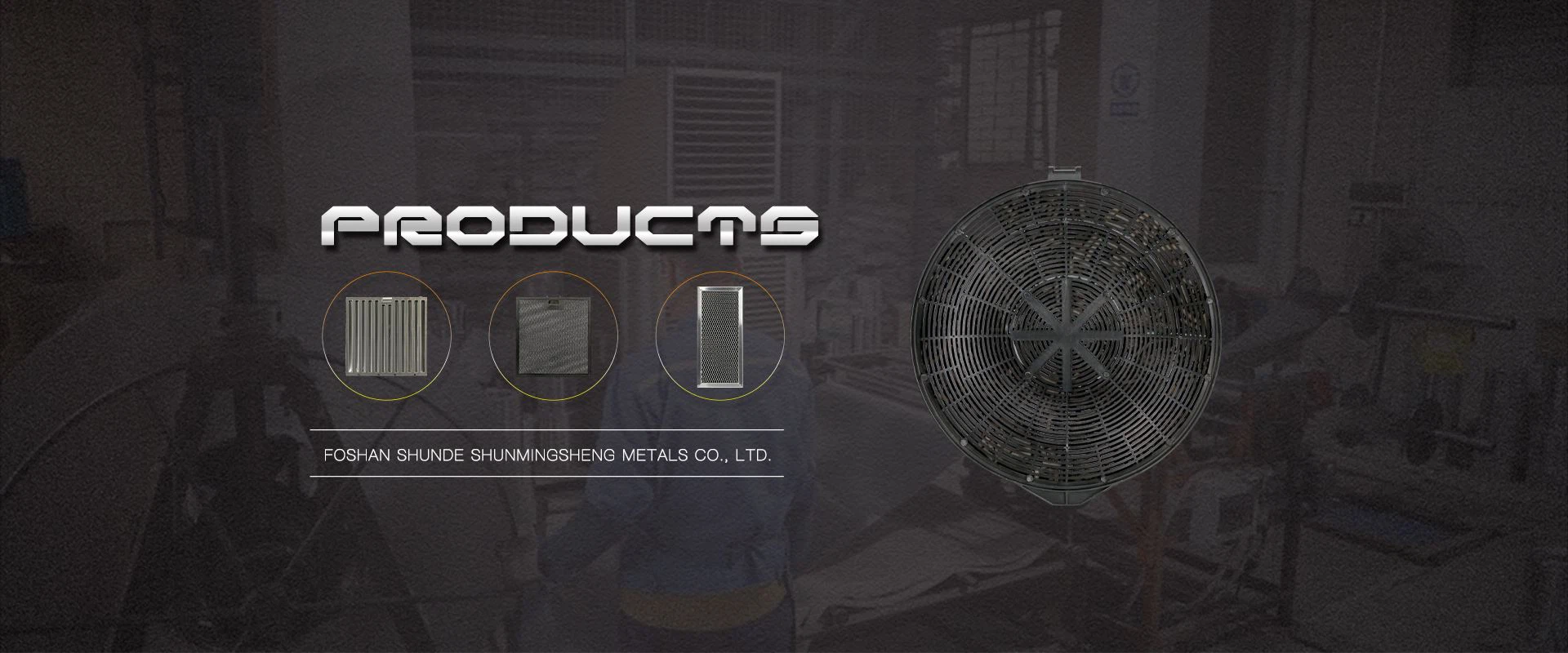
Aluminum Grease Mesh Filter
Shunmingsheng: Your Reliable Aluminum Grease Mesh Filter Manufacturer!
Foshan Shunmingsheng Metals Co., Ltd is a developer and manufacturer of various filters. Our company was established in 2003. Our main products include air purification filters, photocatalyst filters, HEPA filters, filters, stainless steel baffles, honeycomb filters, etc. These filters support mass production and supply 3-5,000 pieces per month. They have been tested from the injection molding of parts to the whole production process, which ensure delivery within 14 days after receiving the deposit.
Rich Experience
Our team has over 20 years of experience in filter design and production. We have been providing customers with professional product guidance, including installation, cleaning and maintenance skills.
Quality Assurance
All our filters are produced, individually tested and certified in controlled environments in ISO-9001 certified factories and have obtained certifications according to CE, TRBA, BGR, ISO and EN.

Rich Product Range
Our product specifications are diverse, including range hood parts and various activated carbon filters, nano-silver filters, cold catalytic filters, corrugated filters, PP washable filters, which are used in various fields such as homes, restaurants, hotels, etc.
Customized Services
Our filters have a number of innovative patents, and we also provide you with customized services in terms of materials, finishes, coatings and sizes, including OEM orders.


What is Aluminum Grease Mesh Filter
An aluminum grease mesh filter is a type of air filter that can capture grease and particulates created during cooking. Exhaust systems that have broken, missing, or undersize air filters are prone to collect accumulations of highly combustible grease deposits throughout the entire duct system. The grease mesh filters are often used in ducted hoods and can be installed under the range hood, facing down, above the stove top. These filters are popular for filtering air, grease, and dust in residential, commercial kitchens, and conditioners, ase well as Food and Beverage Processing.
Features of Aluminum Grease Mesh Filter
Efficient Filtration
Our aluminum mesh filters are made from high-purity aluminum and feature a multi-layer mesh construction to capture dust and grease particles of varying sizes for maximum filtration.
Multi Specifications
They are supplied in a variety of specifications, including different sizes, finishes and filter layers to suit the grease removal tasks in appliances such as range hoods, HVAC air conditioners and microwave ovens.
Quick Installation
These grease filters have overlapping joints to prevent sticking and are compatible with a wide range of range hoods and can be installed under the range hood, over the stove top, facing downwards.
Easy to Clean
These aluminum filters can be hand washed with mild dishwashing detergent and warm water, you just need to let the filter soak in hot water and dish soap for about an hour. Then use a light-bristled brush to gently scrub the surface of the filter, rinse with water and allow time to dry.
Application of Grease Filters
Exhaust hoods and ductwork are given a lot of attention in the realm of commercial kitchen exhaust system cleaning. Grease filters, on the other hand, are an essential component of the puzzle. In a commercial kitchen, grease filters serve two critical functions.
Safety
The primary purpose of a clean grease filter is to aid in the reduction of fire threats in commercial kitchens. Grease particles are caught as grease-laden air flows past the filter. As a result, less grease enters the ducts, where it can cause major fire hazards. Some grease filters have a spark arrestor mechanism that prevents sparks created by cooking with solid fuels like wood or charcoal from entering the ductwork, providing even additional fire safety.

Proper Airflow
The second function of a clean grease filter is to aid in proper kitchen airflow. The excess grease that would build on the walls of your ducting without a grease filter might actually increase drag inside the ducts. This would force your exhaust fan to run continuously, thereby increasing system wear and tear. Smoke and smells would be a problem in the kitchen due to the limited ventilation.
Unfortunately, a grease filter’s performance degrades as it becomes more clogged. A clogged grease filter may be a fire danger in and of itself, as well as restricting airflow even more than clogged ducts.

Benefits of Aluminum Grease Mesh Filter
Customization
As stated above, you can design metal mesh to feature the mesh specifications. This will help ensure your air filtration system can properly remove unwanted airborne particles. Metal mesh can also be formed to accommodate virtually any air filtration operation. There are several post weaving processes that can be applied to bend, cut, stamp, and otherwise alter metal mesh without sacrificing the accuracy of the pore openings.

Durability
Air filters are commonly constructed from various papers or cotton as they are relatively inexpensive materials. That said, they are vastly less durable than metal mesh and must be replaced more often. This not only costs money to purchase replacement filters but causes increased downtime that can leave visitors susceptible to inhaling airborne contaminants.
Aluminum mesh, however, is constructed from metallic alloys, such as stainless steel, thus, has an increased level of durability. Not only does this mean the mesh can withstand the impact of abrasive particles better, but it also has superior resistance to various corrosive materials.
Cleanability
Possibly the most significant quality offered by aluminum mesh is its cleanability. When using paper or cotton filters, once the filter becomes dirty, it must be replaced as the particles become entangled in the fibers.
Now, as metal mesh is typically made from stainless steel, it can easily be cleaned. This is commonly done by simply wiping the filter clean with a damp cloth; however, there are several other cleaning options that can be applied to metal mesh filters.
Factors to Consider When Choose the Right Air Filter
The minimum required number of air filters for a particular exhaust hood can be calculated by dividing the total volume of air to be exhausted (in CFM) by the optimum operating velocity of the filter (in FPM). This number is then divided by the actual square footage of the filter (excluding the frame). The resulting figure represents the minimum number of filters required to efficiently remove the grease from the exhausted air. Example: Assume the following:
An exhaust hood with a minimum required airflow of 3,250 CFM.
Baffle filter with a nominal size of 20 x 20, have an actual filtering surface of 18 x 18. (Nominal size minus the frame equals the actual filtering area.)
An optimum operating velocity of 360 FPM for the air filter.
Volume of Air Exhausted = Filter Area Needed (sq.ft.) Operating Velocity of Filter (FPM) 3,250 CFM=9 sq.ft. 360 FPM Next, convert the actual filter area to square feet: 18″ x 18″ = 324 sq. in. ____324_sq._in.__ =2.25 sq. ft. 144 sq. in./sq.ft. Then divide the 9-sq.ft. of needed filter area by sq. ft. per filter: 9_sq. ft.__ = 4 Filters 2.25 sq.ft. Therefore, in this example, 4 filters would be required to provide adequate removal of grease. Air filters shall be installed at an angle not less than 45 degrees from a horizontal and shall be equipped with a drip tray beneath the lower edge of the filter. This enables the grease to be collected in the drip tray and avoids grease dripping into food, or on food preparation surfaces. Any space in the hood not occupied by a filter should be blanked off with sheet metal.
Distance between Grease Filter and Cooking Surface
The minimum distance between the lowest edge of the grease filter and the actual cooking surfaces shall be as follows: Type of Cooking Minimum Separation Required No exposed flame grill, French fryers, etc. 2 Feet Exposed flame and burners 2 Feet Exposed charcoal and char broiler-type fires 3 ½ Feet Proper hood design will keep the temperature at the exhaust hood filters at less than 200 degrees. When the temperature at the filters is less than 200 degrees, the grease deposits will be brownish in color and can be easily removed. When the temperature exceeds 200 degrees, the grease tends to bake on the filter and becomes extremely difficult to remove.
Air Filters for Kitchen Exhaust Systems
A typical kitchen ventilation system includes an exhaust hood or canopy, ductwork, fan system and a means of providing adequate make-up air. The entire system must constitute a fire safe assembly within the building. Exhaust hoods and canopies capture heat and contaminates in the air by means of filters, extraction baffles (cartridges), and water mist systems. There are many style variations of hoods with canopy styles-a large box with and open bottom-being the most common. Style selection is based on the type of oven and the expected contaminates to be removed. While there are several styles of hoods, all fall within two major categories:
Type I hoods carry a listing label and are manufactured and installed according to the manufacturer’s and listing agencies requirements. They are designed to handle grease and include a number of integrated components within the hood.
Type II hoods are used in the collection of steam, vapor, heat, and odors – but not grease. The two classifications of Type II hoods are condensate and heat/fume.
Maintenance of Your Grease Filters
Commercial kitchen grease filters may become dirty rapidly, but the good news is that they are meant to be cleaned and reused. To begin, have your employees examine the grease filters at the end of each day. The filters should be removed and cleaned if they seem oily. Most grease filters may be readily cleaned by scrubbing them with a solvent, letting them sit for a time, and then washing them in your industrial dishwasher.
But what if your employees don’t have time to do these tasks? What if your kitchen is open 24 hours a day and you can never leave your equipment without grease filters? You can ensure that your grease filters are clean by using our grease filter exchange service.
Every week or so, you can come out and remove your old, dirty filters and replace them with new ones. This doesn’t mean you’ll have to buy new filters every time; instead, we’ll clean your old ones and return them to you on your next visit. To take use of this service, you simply need two sets of filters.
Cleaning Steps
(1)If grease filters are cleaned by your staff, consider these steps to help reduce the fire hazard for your business:
(2)Use a hood filter lifting tool to remove the filters from the hood. This device can be purchased for $60 – $75 and is a much safer way to perform this function.
(3)Start by removing the filters in the center and work toward the end sections. Of course, this will need to occur during non-business hours – once the filters are removed from the hood there should be no cooking.
(4)Several acceptable cleaning options exist. Choose the one that works best for you; no matter which option you choose, the filters should be cleaned down to bare metal without any remaining grease residue.
(5)Put the grease filters into your dishwasher for cleaning. It might take several cycles to fully clean the filters.
(6)Clean the filters using a degreasing agent and pressure washer in an area where the run-off can be collected appropriately.
(7)Fill a kitchen sink with a degreasing agent and let the filters soak.
(8)During the filter cleaning process, empty any corner drain pans or grease channels.
(9)When replacing the filters with the lifting tool, make sure to note any directional markings or arrows that may be on the filter to indicate the proper direction. If there are grease holes, those should be placed at the bottom. The filters should be tight fitting, with no gaps, and installed at a 45-degree angle to allow for proper grease drainage.
Certificate Photo

FAQ
Q: What are grease filters used for?
Q: What is an aluminum filter?
Q: What is aluminium grease used for?
Q: What are the different types of grease filters?
Q: What is a metal mesh filter?
Q: How thick is the aluminum filter?
Q: What is the difference between a grease filter and a carbon filter?
Q: How do metal grease filters work?
Q: Are mesh filters good?
Q: What is filter mesh made of?
Q: What are the different types of grease filters?
Q: Do grease filters work?
Q: Does a carbon filter remove grease?
Q: How do I choose a grease filter?
Q: Why should grease filters be cleaned?
Q: What will dissolve grease?
Q: How do you clean commercial grease filters?
Q: Do filters need to be cleaned?
Q: How often are filters cleaned?
Q: What chemical is used to clean grease?
As one of the leading aluminum grease mesh filter manufacturers in China, we warmly welcome you to buy high-grade aluminum grease mesh filter for sale here from our factory. All customized products are with high quality and low price. For free sample, contact us now.
Change Aluminum Grease Mesh Filter, Oil Aluminum Grease Mesh Filter