

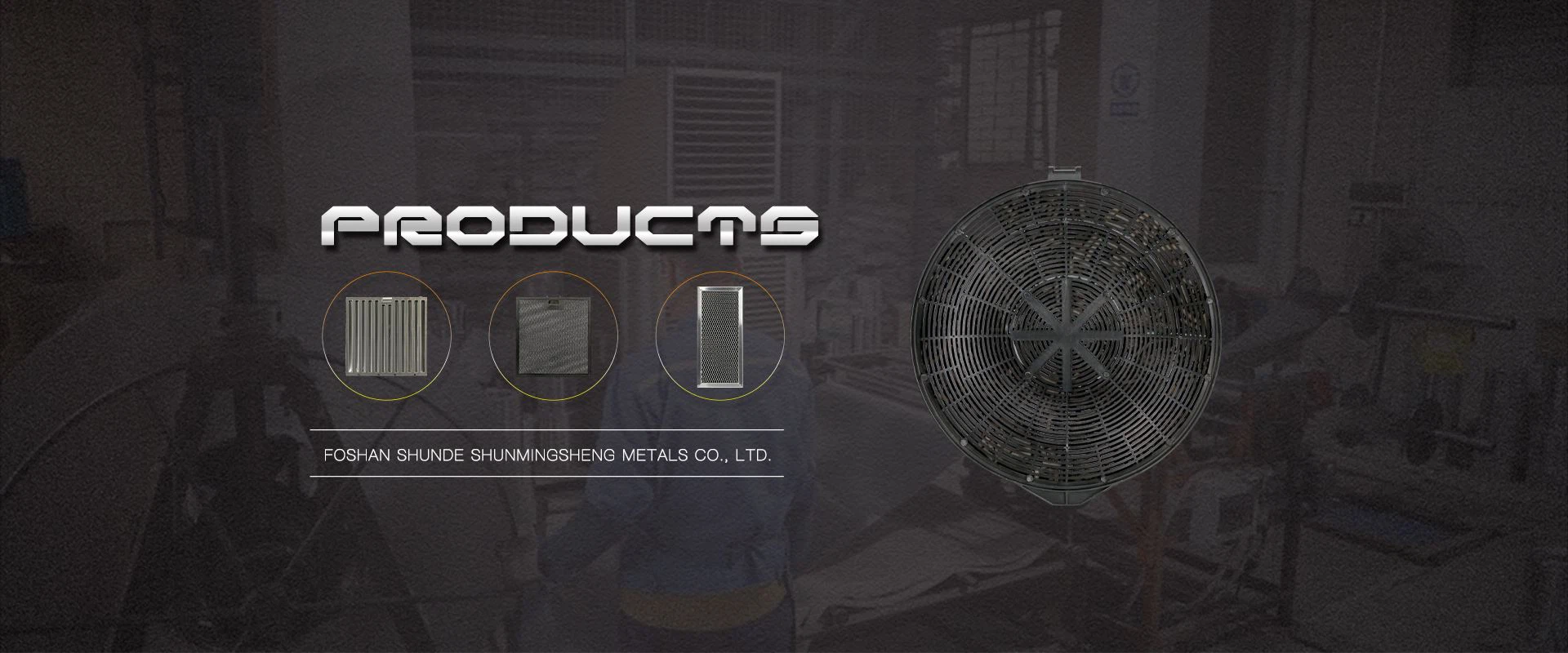
Range Hood Filter Parts
Shunmingsheng: Your Reliable Range Hood Filter Parts Manufacturer!
Foshan Shunmingsheng Metals Co., Ltd is a developer and manufacturer of various filters. Our company was established in 2003. Our main products include air purification filters, photocatalyst filters, HEPA filters, filters, stainless steel baffles, honeycomb filters, etc. These filters support mass production and supply 3-5,000 pieces per month. They have been tested from the injection molding of parts to the whole production process, which ensure delivery within 14 days after receiving the deposit.
Rich Experience
Our team has over 20 years of experience in filter design and production. We have been providing customers with professional product guidance, including installation, cleaning and maintenance skills.
Quality Assurance
All our filters are produced, individually tested and certified in controlled environments in ISO-9001 certified factories and have obtained certifications according to CE, TRBA, BGR, ISO and EN.

Rich Product Range
Our product specifications are diverse, including range hood parts and various activated carbon filters, nano-silver filters, cold catalytic filters, corrugated filters, PP washable filters, which are used in various fields such as homes, restaurants, hotels, etc.
Customized Services
Our filters have a number of innovative patents, and we also provide you with customized services in terms of materials, finishes, coatings and sizes, including OEM orders.
-
![Cleaning Range Hood Filter]() Cleaning Range Hood Filtercustom size range hood filter aluminum filter factory manufactureread more
Cleaning Range Hood Filtercustom size range hood filter aluminum filter factory manufactureread more -
![Range Filter]()
-
![Rangehood Filter Mesh]()
-
![Custom Made Range Hood Filters]()
-
![Kitchen Hood Grease Filters]()
-
![Kitchen Air Range Hood Parts Aluminum Filter]() Kitchen Air Range Hood Parts Aluminum FilterMaterial: Aluminum sheetread more
Kitchen Air Range Hood Parts Aluminum FilterMaterial: Aluminum sheetread more
Latch: Double PP latch
Layers: 5 layers aluminum meshes
Size: 120*330*9 mm or size could be customized -
![Range Hood Grease Filter Replacement Parts]() Range Hood Grease Filter Replacement PartsMaterial: range hood grease filter replacement partsread more
Range Hood Grease Filter Replacement PartsMaterial: range hood grease filter replacement partsread more
Mesh type: Aluminum mesh
Color: Silver
Size: 231*300*80mm or support customized services -
![kitchen vent hood filters]() kitchen vent hood filtersMaterial: arc-shaped kitchen air range hood parts filter Aluminumread more
kitchen vent hood filtersMaterial: arc-shaped kitchen air range hood parts filter Aluminumread more
Latch: Plastic latch
Layers: 5 layers aluminum meshes
Size: 259*319*9 mm or size could be customized -
![Hexagon Plastic Handle Kitchen Air Range Hood Parts Filter]() Hexagon Plastic Handle Kitchen Air Range Hood Parts FilterMaterial: Aluminumread more
Hexagon Plastic Handle Kitchen Air Range Hood Parts FilterMaterial: Aluminumread more
Latch: PP latch
Layers: 5 layers aluminum meshes
Size: 258*319*9 mm or size could be customized -
![kitchen exhaust hood filters]() kitchen exhaust hood filtersMaterial: Aluminum mesh Exhaust Range Hood Parts Filterread more
kitchen exhaust hood filtersMaterial: Aluminum mesh Exhaust Range Hood Parts Filterread more
Latch: Handle
Layers: 5 layers aluminum meshes
Size: 350*350*9 mm or size could be customized -
![range hood filter replacement]() range hood filter replacementMaterial: Range hood parts replacement filter Aluminumread more
range hood filter replacementMaterial: Range hood parts replacement filter Aluminumread more
Mesh type: Grid Aluminum
Frame Material: Metal Frame
Color: Silver -
![range vent hood parts]() range vent hood partsMaterial: SMS filter range hood partsread more
range vent hood partsMaterial: SMS filter range hood partsread more
Material: Aluminum
Latch: PP latch
Layers: 5 layers aluminum meshes
Size: 259*319 mm or size could be customized


What is Range Hood Filter Parts
Hood filters are installed over stoves and are designed to capture and remove smoke, grease, and debris to prevent them from getting into the ventilation system. Without these hood filters, grease, particulate matter in smoke and other types of debris would build up in the air ducts and could become a fire hazard. The three most common types of filters are stainless steel baffle filters, aluminum mesh filters, and charcoal filters. Don’t underestimate the importance of indoor air quality: according to the EPA, Americans spend about 90 percent of their time indoors, where the concentration of some pollutants is two to five times higher than outdoors.
Features of Range Hood Filter Parts
Efficient Filtration
Made of high-hardness aluminum and carbon steel, our range hood filters contain a multi-layer filter structure to easily filter grease, dirt and food residue, with an added carbon layer to remove odors.
Sturdy Construction
Their metal frames adopt a thickened design, which is stronger and not easy to deform. The edges of the frame are polished and rounded, so your hands won't be cut during installation and removal.
Easy to Install
The filters are compatible with a wide range of cabinet hoods, chimney wall hoods, island hoods, downdraft ventilation systems and come with grab bars and filter pads with clips for quick installation into the hood's slots.
After-sales Guarantee
Our filters are made of durable materials and provide 100% after-sales guarantee, if you are not satisfied please contact us, we will reply you within 24 hours and provide the best service.
Types of Range Hood Filter Parts
Stainless Steel Baffle Filter
Stainless steel baffle filters are designed for heavy-duty cooking, but you can find them in any high-quality, ducted model. These filters trap grease while helping the exhaust fan suck out smoke, steam, and odors. The grooves within the filters are designed to lift heavy grease particles up into the hood filter and change the direction of the airflow, trapping it from falling onto your cooking surface and into your food.
The stainless steel construction makes it easy to clean with a bit of soap and water. If they’re dishwasher safe, you can even run through them with your next cycle of dishes. The material is also quite durable, but you should replace them according to manufacturer recommendations for best results.

Aluminum Mesh Filter
Aluminum mesh filters are excellent for everyday cooking and medium use. The filter works by using two layers of filtration: aluminum mesh and activated charcoal. The aluminum mesh serves as a support structure for the charcoal and helps to trap larger particles like grease and oil. They typically have a checkered pattern. As air is drawn through the range hood and passes through the filter, the activated charcoal in the filter absorbs any odors, smoke, and other toxins before recirculating air back into the kitchen.
Charcoal Filters
Charcoal filters are typically found with ductless range hoods. In fact, they’re often used to convert ducted models to ductless. These filters are made of carbon-based material. This allows them to filter out contaminants and deodorize any odors produced during the cooking process.
Due to their specific purification process, these filters can’t be cleaned. Instead, charcoal filters need to be replaced regularly. When paired with a quality ductless model, they work well with medium or everyday cooking. If you stir fry a lot or otherwise use high levels of heat often, you may benefit more from a model with baffle filters.
Factors to Consider When Choose Range Hood Filter Parts
Standards
Hood filters might not be the most glamorous item in your kitchen, but you’d be amiss without it. Hood filters are designed to remove smoke, grease and other debris from the air before it hits your ventilation system. Without this line of defense, these materials would build up in your air ducts and become a serious fire hazard. And if safety wasn’t enough, hood filters are required in order to meet National Fire Protection Association (NFPA) and International Fire Code (IFC) regulations.
Material
Hood filters come in one of three different materials: Aluminum, Galvanized and Stainless Steel. In order to pick the best hood filter for your kitchen, first consider the following: Can customers see into your kitchen? and Do you have a high volume kitchen?
Galvanized Steel is a durable option in the kitchen, but its dull appearance isn’t the most aesthetically pleasing for open kitchen concepts. Aluminum on the other hand features a shiny, attractive finish, but it’s softer than other materials and will need to be replaced more frequently. Stainless steel is often used for durability and an attractive appearance, but stainless steel hood filters do cost more upfront.
Construction
Once you determine which material best suits your need, next comes construction. Hood filters are constructed as either welded or riveted. The frame of a riveted hood filter is held together by rivets and a series of individual baffles; this type of construction makes for a more flexible hood filter causing the rivets to loosen over time. Conversely, the baffles on welded hood filters are made out of a single piece of metal which makes for a more durable and rigid design. As you’d expect, these heavy duty filters will cost you more up front, but could last longer in the long run.
Size
Finally, before you purchase any hood filter for your kitchen be sure you size it appropriately. The size of the hood filter will be roughly a ½ smaller than the size listed on the site. That means that a 20 by 20 inch hood filter will actually be sold as a 19 ½ inch by 12 &frac; inch filter. Industry practice always states the vertical dimension first (with baffles running up and down) and then the horizontal dimension second.

How Do I Clean Range Hood Filters
You can clean mesh, aluminum, and steel baffle filters by hand. Keep in mind many baffle filters are dishwasher-safe so you can save yourself some time by running them in your next dishwasher cycle.
To clean filters by hand, start by removing them from the range hood based on manufacturer instructions. Then, rinse them under hot running water. Next, soak the filters in warm, soapy water to help break up any debris.
After you’ve soaked the filters, you’ll prepare a solution of equal parts warm water and mild dishwashing detergent. Place the solution in a bowl or other container large enough to hold the filters. Submerge the filters in the soapy solution for 15 minutes.
After 15 minutes, remove the filters and use a non-abrasive brush or sponge to clean them. Rinse the filters thoroughly to remove any leftover grease and soap. You can pat them dry with a towel or set them on a drying rack to finish the cleaning process. Once dry, carefully reinstall the filters.
Remember: charcoal filters can’t be cleaned so you’ll need to replace them per manufacturer recommendations.
Maintenance Tips of Range Hood Filters
Cleaning Frequency
You can clean mesh, aluminum, and steel baffle filters by hand. Keep in mind many baffle filters are dishwasher-safe so you can save yourself some time by running them in your next dishwasher cycle.
To clean filters by hand, start by removing them from the range hood based on manufacturer instructions. Then, rinse them under hot running water. Next, soak the filters in warm, soapy water to help break up any debris.
After you’ve soaked the filters, you’ll prepare a solution of equal parts warm water and mild dishwashing detergent. Place the solution in a bowl or other container large enough to hold the filters. Submerge the filters in the soapy solution for 15 minutes.
After 15 minutes, remove the filters and use a non-abrasive brush or sponge to clean them. Rinse the filters thoroughly to remove any leftover grease and soap. You can pat them dry with a towel or set them on a drying rack to finish the cleaning process. Once dry, carefully reinstall the filters.
Replacing
How often you replace your range hood filters will depend on how often you cook, the type of filter, and the manufacturer recommendations. As a general rule, you can expect to replace filters every six months (excluding charcoal filters). Here are a few more factors to consider:
●Range hood usage: If you cook often and/or use high levels of heat, your filters will accumulate more grease, smoke, and other particles. In that case, you'll need to change your filters more often than someone who cooks only a few times a week.
●Filter type: Due to their specific purification process, charcoal filters cannot be cleaned. Instead, these filters will need to be replaced on an average cycle of 2 months or so, depending on your cooking frequency, or as you see needed.
●Manufacturer recommendations: Be sure to check your range hoods manual to review the manufacturer's recommendations for replacement.
●Visual inspection: Check your filters for buildup of grease and particles. Look for wear and damage as well. If the filters appear dirty, clogged, or damaged, it's time to replace them.
Certificate Photo

FAQ
Q: What is a range hood filter?
Q: What are the different types of hood filters?
Q: What is included in a range hood?
Q: Where is range hood filter?
Q: Why do range hoods have filters?
Q: Are range hoods and vent hoods the same thing?
Q: What kind of vent for range hood?
Q: How are range hoods vented?
Q: Is a range hood filter necessary?
Q: What are kitchen hood filters made of?
Q: Can you replace range hood filters?
Q: How does a hood filter work?
Q: Do range hoods have charcoal filters?
Q: Why use Rangehood?
Q: What is the difference between a grease filter and a carbon filter?
Q: Are range hood charcoal filters washable?
Q: Are all range hood filters the same size?
Q: Why is it important to clean vent hood filters?
Q: Do carbon filters remove oil?
Q: How often do you need to change the filter in a range hood?
As one of the leading range hood filter parts manufacturers in China, we warmly welcome you to buy high-grade range hood filter parts for sale here from our factory. All customized products are with high quality and low price. For free sample, contact us now.