

Cooker Range Hood Filter
Shunmingsheng: Your Reliable Cooker Range Hood Filter Manufacturer!
Foshan Shunmingsheng Metals Co., Ltd is a developer and manufacturer of various filters. Our company was established in 2003. Our main products include air purification filters, photocatalyst filters, HEPA filters, filters, stainless steel baffles, honeycomb filters, etc. These filters support mass production and supply 3-5,000 pieces per month. They have been tested from the injection molding of parts to the whole production process, which ensure delivery within 14 days after receiving the deposit.
Rich Experience
Our team has over 20 years of experience in filter design and production. We have been providing customers with professional product guidance, including installation, cleaning and maintenance skills.
Quality Assurance
All our filters are produced, individually tested and certified in controlled environments in ISO-9001 certified factories and have obtained certifications according to CE, TRBA, BGR, ISO and EN.

Rich Product Range
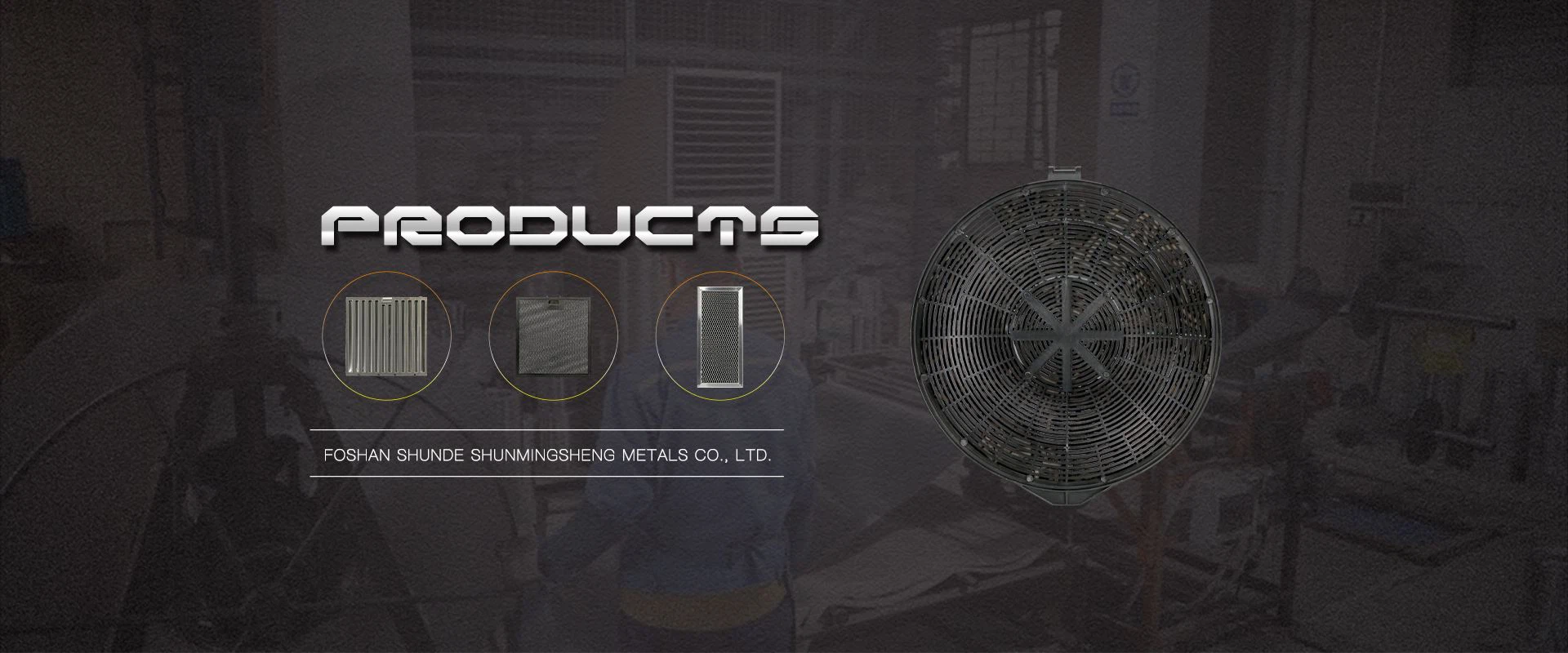
Our product specifications are diverse, including range hood parts and various activated carbon filters, nano-silver filters, cold catalytic filters, corrugated filters, PP washable filters, which are used in various fields such as homes, restaurants, hotels, etc.
Customized Services
Our filters have a number of innovative patents, and we also provide you with customized services in terms of materials, finishes, coatings and sizes, including OEM orders.
-
![Stainless Steel Strainer Filter]()
-
![Mesh Filter For Cooker Hood]()
-
![Cheap Cooker Hood Filters]()
-
![Cooker Hood Filter Mesh]()
-
![Cooker Hood Parts]()
-
![Push-draw Mode Latch Cooker Range Hood Filter]() Push-draw Mode Latch Cooker Range Hood FilterMesh type: Aluminum meshread more
Push-draw Mode Latch Cooker Range Hood FilterMesh type: Aluminum meshread more
Color: Silver
Shape: Rectangle
Size: 231*300*80mm or support customized services -
![Carbon Cotton Cooker Range Hood Filter]() Carbon Cotton Cooker Range Hood FilterMaterial: Aluminumread more
Carbon Cotton Cooker Range Hood FilterMaterial: Aluminumread more
Latch: Plastic latch
Layers: 2 layers aluminum mesh+ carbon cotton
Size: 149*339*9 mm or size could be customized -
![homemade charcoal filter]() homemade charcoal filterModel Number: SMS037read more
homemade charcoal filterModel Number: SMS037read more
Frame: Aluminum frame
Layers: Five layer aluminum meshes
Size: 231*309mm or size could be customized


What is Cooker Range Hood Filter
Hood filters are installed over stoves and are designed to capture and remove smoke, grease, and debris to prevent them from getting into the ventilation system. Without these hood filters, grease, particulate matter in smoke and other types of debris would build up in the air ducts and could become a fire hazard. Kitchen hood filters come in various materials and structures, meeting precise features and project specifications relating to the specific hood where they are installed. They are usually made of aluminium, stainless steel, ceramic or a fleece material.
Features of Cooker Range Hood Filter
Quick Installation
Our cooker hood grease filter is an accessory that can be used between several cooker hood models. It has a lock for removal and insertion and can be quickly installed in different positions on the cooker hood, such as underneath it or above the stove top.
Multi-layer Structure
They use a multi-layer mesh design to increase the filtration area and capture grease, dust and chemical particles of different particle sizes, thereby improving kitchen air quality.
Rich Specifications
Made from galvanized, stainless steel or aluminum, these range hood filters are available in custom sizes and finishes for use on different kitchen cookers.
Easy to Clean
Our charcoal filters are not washable, but the metal filter surface is polished and treated with an anti-rust coating and can be restored to cleanliness by soaking in a mild detergent and warm water and scrubbing gently with a brush.
Types of Cooker Range Hood Filter
Generally, there are two kinds of cooker hoods; one that vents the air in your kitchen directly outside, and one that cleans the air before recirculating it back into the kitchen. What filters your cooker hood uses depends on your style of cooker hood, so let’s take a look at the three different types of filters.
Grease Filters
When it comes to grease filters, the clue is in the name. As your cooker hood vents or recirculates the air in your kitchen, the grease filter captures all of the grease in the air. These filters can be found in both types of cooker hoods, as this level of filtration is necessary no matter what the cooker hood’s function is. They are generally found on the inner side of the cooker hood cover panel.
Acrylic filters are a not frequently used type of disposable grease filter, and for this reason they must be changed as soon as the system filtering capacity is at saturation.
Aluminum or stainless-steel filters are washable grease filters. They are made up of metallic grids, that capture fatty and greasy substances found in extracted air within their surface. Aluminum or stainless-steel filters can be washed by hand with neutral detergents or in the dishwasher at a low temperature, without losing their filtering capacity. Furthermore, stainless steel filters do not fade from washing, differently from aluminum ones.

Mesh Filters
Alternatively, your cooker hood may just have a mesh filter instead. When it comes to mesh filters, they serve as both the cover panel for your cooker hood and as the grease filter. Since these filters carry out the same function as grease filters, your cooker hood will most likely have either one or the other.
Carbon Filter
If your cooker hood recirculates the air instead of venting it, however, it will also have a second filter alongside a mesh or grease filter. This is known as a carbon filter. As the air is being recirculated back into your home, the carbon filter removes any bad smells or odours to prevent them from lingering or returning. This filter is not necessary for a cooker hood that simply vents the air, as any odours will simply disappear outside.
The simplest type of odor filter is the standard charcoal filter, that requires replacement once its first filtering cycle is completed (i.e. 3-6 months).
Long life hp charcoal filters are highly efficient and can be regenerated up to 3 years, through regular washing (every 2-3 months).
Lastly, ceramic filters reach very high odor absorption efficiency levels and have high mechanical strength. Even this type of filter requires periodic maintenance (2-3 months) by heat regeneration.
Benefits of Cooker Range Hood Filter
Improves Air Quality
When it comes to preparing and cooking daily meals, your kitchen will surely be one of the busiest rooms. As a result, it can produce plenty of unwanted smoke, steam, or particles that decrease the air quality in your kitchen and the surrounding areas. With a cooker hood filter, it can keep the air clean as the suction fan removes odours, smoke, grease, and other pollutants that are released into the air while you’re cooking.
Better Ventilation
It’s no secret that when you cook, you’re exposed to excess heat from the stove and the surrounding area. One way for you to remedy this issue is by using the cooker hood filter to provide better ventilation in the kitchen. Besides, the cooker hood filter helps to absorb hot air from your surroundings and redirects it elsewhere, providing a more pleasant cooking environment.
Improves Kitchen Cleanliness
Grease and excess moisture from all your cooking sessions can create a sticky film that’s difficult to clean. With a cooker hood filter, it can help minimise the settling of your unwanted cooking residues by absorbing the splattering, steaming grease into a concentrated area and through the hood ventilation system. This will eventually improve the cleanliness of your kitchen and help create a clean, comfortable cooking environment.
Factors to Consider When Choose Cooker Range Hood Filter
Grease Collection Rate: Metal filters trap between 20-40% of airborne grease, whereas our Filters can trap up to 98% in comparison, efficient in trapping even the finest of airborne particles. When used according to the Filter Change Guide, our Filters will work three times harder to intercept the airborne grease that is produced from cooking activity.
Cleaning Method: At a minimum, commercial kitchens must check their hood filter every month to see if they require cleaning. If they do, businesses can either engage a filter exchange company or clean them in-house.
Additional Cleaning: If a business has been busier than usual, hood filters will most likely require extra cleaning. If done in-house, staff will have to make extra time within their daily routine or if using a filter exchange service, an additional exchange will need to be booked in.
Environmental Impact Whether you engage a filter exchange service or clean metal hood filters in-house, there is no way of avoiding the use of potentially harsh chemicals and copious amounts of water. This not only costs you money but is environmentally unfriendly.
Cost Per Filter: Metal hood filters require a higher investment upfront. If cleaned in-house, business owners must factor in water usage, chemicals and the cost of labour. So if you decide to invest in disposable hood filters then consider buying in bulk, which often comes at a more advantageous price per product.
Change Frequency: Hood filters service different equipment, therefore, some filters will need more frequent exchange/cleaning than others (i.e. those above a grill will need more attention than those servicing a fryer or combi oven).
Routine Duct Cleaning: As metal hood filters allow the majority of grease to enter the exhaust system to build-up, commercial kitchens need to have their routine duct cleaning done more frequently. This could be anywhere from monthly to annual cleans. Moreover, the extent of the duct cleaning is reduced down to nothing more than a mini-clean. This will see you saving for years (and minimise your fire risk)!
How to Clean Different Cooker Hood Filter
Fortunately, cleaning and replacing your cooker hood filters is a fairly quick and simple task. Here’s how to clean or replace the different types of filters.
Mesh Filters
If your cooker hood has a metal mesh filter instead of a fabric one inside, it will need to be cleaned every three to four months. To clean your mesh filter, you first need to remove it from the cooker hood. This is generally easy to do, but you may need a screwdriver at hand to help you remove it. Then, simply spray both sides of the mesh filter with a filter cleaner spray and leave it to soak for ten minutes. Afterwards, give the filter a thorough rinse, allow it time to dry then return it back to its place in the cooker hood. Alternatively, you can often wash this type of filter in your dishwasher but check the manual first to make sure this is possible for your model of cooker hood.
Grease Filters
If your cooker hood has a grease filter inside the cover panel, it will need to be replaced when it gets dirty. This is generally between every three to six months, and you will know if it is dirty because it will look discoloured and saturated. Some filters also have a colour changing saturation indicator to help you know exactly when it’s time for a filter change.
To access the grease filter, simply remove the cover panel. As mentioned above, this is usually easy to do but may require a screwdriver. Then, if your grease filter looks dirty and is in need of changing, simply remove it and replace it with a new one before refitting the cooker hood cover panel.
Carbon Filters
With carbon filters, you should generally replace them about once every four months. Before you purchase a replacement carbon filter, however, you will need to know your cooker hood model number. This can usually be found on a sticker either somewhere on the exterior of your cooker hood, or inside when you remove the mesh filter or cover. The model number will consist of a combination of numbers and letters and may include other symbols such as a slash (/) or a dash (-).
Once you’ve got hold of a replacement carbon filter, the replacement is quick and easy. Simply remove your cooker hood cover or mesh filter (as described above in the grease filters section above) and twist the carbon filter anti-clockwise to release it. Then replace it with the new filter, turning it clockwise to secure it in place.
Certificate Photo

FAQ
Q: What is Hood Filter for Cooker?
Q: Does my cooker hood need a filter?
Q: How often should you change the filter in a cooker hood?
Q: What is the purpose of a cooker hood?
Q: How long do cooker hood filters last?
Q: Can I use cooker hood without carbon filter?
Q: Do cooker hoods have filters?
Q: Are cooker hood carbon filters washable?
Q: Do all cooker hoods have charcoal filters?
Q: What is the best type of filter in a range hood?
Q: What are the disadvantages of a cooker hood?
Q: Which is better a cooker hood or extractor fan?
Q: What are the pros and cons of cooker hoods?
Q: How do you remove a filter from a cooker hood?
Q: What are grease filters made of?
Q: How do you clean a cooker hood?
Q: How often should you clean your hood vent filter?
Q: How do you clean a greasy hood filter?
Q: Do carbon filters remove moisture?
Q: How often should I change cooker hood filter?
As one of the leading cooker range hood filter manufacturers in China, we warmly welcome you to buy high-grade cooker range hood filter for sale here from our factory. All customized products are with high quality and low price. For free sample, contact us now.
Pentagon Carbon Cotton Cooker Range Hood Filter