

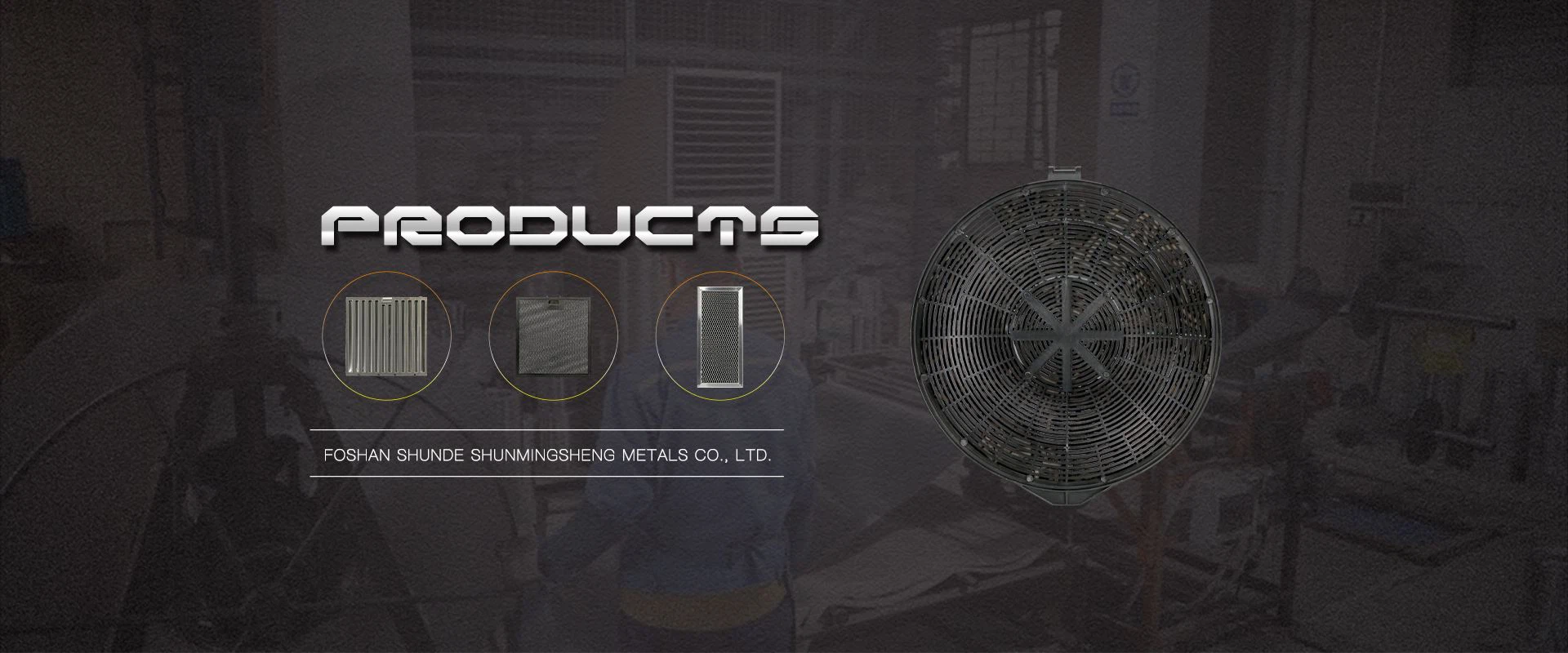
Charcoal Cooker Filter
Shunmingsheng: Your Reliable Charcoal Cooker Filter Manufacturer!
Foshan Shunmingsheng Metals Co., Ltd is a developer and manufacturer of various filters. Our company was established in 2003. Our main products include air purification filters, photocatalyst filters, HEPA filters, filters, stainless steel baffles, honeycomb filters, etc. These filters support mass production and supply 3-5,000 pieces per month. They have been tested from the injection molding of parts to the whole production process, which ensure delivery within 14 days after receiving the deposit.
Rich Experience
Our team has over 20 years of experience in filter design and production. We have been providing customers with professional product guidance, including installation, cleaning and maintenance skills.
Quality Assurance
All our filters are produced, individually tested and certified in controlled environments in ISO-9001 certified factories and have obtained certifications according to CE, TRBA, BGR, ISO and EN.

Rich Product Range
Our product specifications are diverse, including range hood parts and various activated carbon filters, nano-silver filters, cold catalytic filters, corrugated filters, PP washable filters, which are used in various fields such as homes, restaurants, hotels, etc.
Customized Services
Our filters have a number of innovative patents, and we also provide you with customized services in terms of materials, finishes, coatings and sizes, including OEM orders.
-
![Charcoal Filters For Home]()
-
![Charcoal Filter Cooker Hood]()
-
![Charcoal Filter For Range Hood]()
-
![activated charcoal filter cooker hood]() activated charcoal filter cooker hoodMaterial: Activated Carbon charcoal cooker filterread more
activated charcoal filter cooker hoodMaterial: Activated Carbon charcoal cooker filterread more
Filterinner material: Cotton+ granule carbon particle
outer diameter: 175mm
Height: 23mm -
![carbon filter system]() carbon filter systemMaterial: charcoal cooker filter for range hoodread more
carbon filter systemMaterial: charcoal cooker filter for range hoodread more
Inner material: cotton+ granule carbon particle
Outer diameter: 175mm
Height: 23mm -
![hepa and carbon air purifier]() hepa and carbon air purifierMaterial: Hepa Materialread more
hepa and carbon air purifierMaterial: Hepa Materialread more
Frame: Paper Cardboard
Inner Material type: carbon cardboard
Size: 200*340*40mm


What is Charcoal Cooker Filter
Charcoal filters are used in extractor hoods to help absorb cooking smells when air is circulated. They are made of a carbon material that traps some of the contaminants and neutralizes odors produced from cooking. When filtering water, charcoal carbon filters are most effective at removing chlorine, particles such as sediment, volatile organic compounds (VOCs), taste and odor. But they are not effective at removing minerals, salts, and dissolved inorganic substances. Charcoal filters are ideal for ductless range hoods and are often used in smaller kitchens such as those found in an apartment, townhome, or condo.
Features of Charcoal Cooker Filter
Wide Compatibility
Our carbon filters are suitable for grease adsorption applications in various cookware, including air filters, range hoods, air fryers and other equipment, and can quickly filter large particles of dust and remove odors.
Multi Modes
These carbon filters can be installed in either ducted (exhaust to the outside) or ductless (recirculated) mode when used, providing flexible results in high-rise buildings, small apartments, and returning clean air to the kitchen.
Easy to Install
They are compact and can be installed and replaced quickly. You just need to open the hood of the range hood and see a small metal cylinder, insert the new filter into the hood, close to the cylinder and close the grease filter.
Eco Friendly
To ensure the performance of your range hood, you should replace the carbon filter every 2 to 4 months, and these filters are made of stainless steel, carbon material, and are highly recyclable to reduce environmental pollution.
Application of Charcoal Cooker Filter
Laboratories – In many labs, carbon filters are used to help remove contaminants from the environment such as harmful gases from chemicals used in the lab, and to help minimise the amount of dust in the room which could compromise work that is being carried out.
Hospitals – In a similar way to labs, it is important that carbon filters are used to help remove dust that may be in the air, especially in areas such as operating theatres where it is essential that every surface is as clean as possible.
Petrochemical & Pharmaceutical – Carbon filters are regularly used in the production of medications, a similar use to that of any typical lab environment (although there are of course, many different kinds of lab) where surfaces and the air as must remain as clean and dust-free as possible. In this application, the carbon filter would help to minimise the amount of potentially harmful gas produced as a bi-products of petrochemical production or use.
Metal processing – Filters are commonly used to protect from contamination caused by processes such as welding, which may include molecular pollutants that can result in odours, corrosive interactions or the presence of toxins that may pose a danger to staff and the atmosphere.
Nuclear power generation & Isotope production - Incorporated into safety systems, carbon filters are used here to provide protection against toxic gases, radioactive particulates and other hazardous contaminants.
Wastewater & Landfill sites – Carbon filters are often supplied to be used for odour control at landfill sites, sewage, organic waste and wastewater plants. Tank Breather filters are also available for the control of discharges/displaced air arising from tank emptying, filling and temperature effects. Impregnated grades of carbon are selected to enhance the removal of specific contaminants.
Military – Carbon filters used for military applications must meet strict specifications such as being specifically designed to provide the high-performance removal of NBC (Nuclear, Biological and Chemical) CBRN (Chemical, Biological, Radiological and Nuclear) contaminants and protection against odours, gases and airborne particles. Military standard carbon filters must also often meet weight restrictions, minimum service life requirements, access and size limitations and shock resistance.
Telecommunications, Electronics, Computers and Avionics - To protect sensitive equipment from particle and dust contamination, dust and particle filters are specifically designed for the Telecommunications/Electronics industry. Fire Retardant and Radio Frequency Interference versions can also available on request.
Hotels, Airports & Offices – Carbon filter applications can range from small scale ventilation to large volume air handling systems such as those in the travel and tourism industry. Filters are available in most standard sizes or may be designed using CAD (computer-aided design) and manufactured in any quantity to meet particular dimensions and specification requirements for their intended use.
Museums, Libraries, Archives & Galleries - Air filters have been selected by many leading museums and art galleries to protect artefacts from the ravages of airborne pollutants. Carbon filters are used to help control the amount of damaging atmospheric pollutant gases which could be present and cause damage to the objects being displayed or stored. This protocol is in use today by many of the national museums and art galleries around the world. Filtering the air provides an extremely cost-effective way for conservationists to protect valuable artefacts and paintings.
Catering & food Manufacturing - Filters are extensively used by the catering industry to meet the odour control requirements of Environmental Health Departments and Local Authorities. Carbon filters are also employed within the food processing sector to protect machinery from the ingress of food ingredients and the food process line from external contamination.

Charcoal is carbon. Activated charcoal is charcoal that has been treated with oxygen to open up millions of tiny pores between the carbon atoms. According to Encylopedia Britannica:
The use of special manufacturing techniques results in highly porous charcoals that have surface areas of 300-2,000 square metres per gram. These so-called active, or activated, charcoals are widely used to adsorb odorous or coloured substances from gases or liquids.
The word adsorb is important here. When a material adsorbs something, it attaches to it by chemical attraction. The huge surface area of activated charcoal gives it countless bonding sites. When certain chemicals pass next to the carbon surface, they attach to the surface and are trapped.
Activated charcoal is good at trapping other carbon-based impurities ("organic" chemicals), as well as things like chlorine. Many other chemicals are not attracted to carbon at all -- sodium, nitrates, etc. -- so they pass right through. This means that an activated charcoal filter will remove certain impurities while ignoring others. It also means that, once all of the bonding sites are filled, an activated charcoal filter stops working. At that point you must replace the filter.
Benefits of Charcoal Cooker Filter
Reduce Allergies
Allergic reactions are usually triggered by substances and particles in the environment, usually airborne. These allergens might also cause significant irritation to the eyes. Activated carbon filter works to filter and trap molecules and gases liable to trigger allergic reactions.
Prevent Upper Respiratory Tract Irritation
Smoke, chemicals, volatile organic compounds, and gases have been known to irritate the upper respiratory tract, causing an itchy throat, sore throat, coughing, and inflamed tonsils. An activated carbon air filter works to absorb and trap irritants in a bed of charcoal and prevent them from getting into your home.
Reduce the Risks of Cancer
It is no news that some aforementioned air pollutants have carcinogenic properties, and inhalation can predispose one to cancers over a long period. Activated carbon air filters preclude the entry of these substances into your home.
Eliminate Odors
Aside from trapping pollutants, Activated Carbon filters also work to keep the air fresh and odor-free, so you do not have to worry about nauseating odors from household or industrial chemicals.
Installing charcoal filters in your ductless range hood is simple. Follow these easy steps below:
(1)Place the canal of the carbon filter at the benchtops of the engine cover and fix it by turning clockwise.
(2)To remove the carbon filter, turn it counterclockwise.
(3)Do not wash the carbon filters and change them according to the frequency of use.
(4)Remove the pipe plate and adapter.
(5)Place the block of the filter on the motor cabin and fix the pipe plate in place.
(6)The cloth of the filter should be washed in the dishwasher once or twice according to the frequency of use.
(7)After washing six times, a new carbon filter cloth should be used.
(8)Remove the carbon filter cloth after taking off the upper cover on the plate.
(9)After washing and drying, place. it again in the pipeline.
(10)Fit the carbon filter into place in the motor cabin by paying attention to its position.


When to Clean the Charcoal Cooker Filter
Standard charcoal filters cannot be washed or regenerated; therefore, once their first filtering cycle has ended (3-6 months), they must be replaced. Standard filters have been designed to be easily interchangeable, thus facilitating replacement operations.
Long-life filters are special regenerable filters that can reach odor filtering efficiency levels of over 60% and 80%, respectively. They have a lifespan of up to 3 years, and require maintenance every 2/3 months.
Activated charcoal ceramic filter has filtering levels of over 80%, then it is possible to regenerate them. By placing them in the oven, every 2/3 months, at 200 degrees for about 45 minutes, you can restore the filter to proper operation for a considerable number of cycles (lasting up to 5 years). However, it’s always best to check the instructions found on the filter box: here you will find all information on when to replace them, if it is possible to regenerate them and how to do so, without the risk of damaging the appliance.
Certificate Photo

FAQ
Q: What is Charcoal cooker Filter in short?
Q: What is the purpose of a charcoal filter?
Q: What is the difference between a charcoal filter and a grease filter?
Q: Do I need a charcoal filter for my cooker hood?
Q: Do charcoal filters work in kitchen?
Q: What is the disadvantage of charcoal filter?
Q: Why are charcoal filters better?
Q: How long do charcoal filters last?
Q: Can a charcoal filter be washed?
Q: What does a charcoal filter do in a cooker hood?
Q: How long do cooker hood charcoal filters last?
Q: Do charcoal filters make a difference?
Q: Are charcoal filters worth it?
Q: Do charcoal filters remove bacteria?
Q: Do charcoal filters clean air?
Q: Do charcoal filters soften water?
Q: Do charcoal filters reduce smell?
Q: Do coffee makers need charcoal filters?
Q: Can charcoal filters be cleaned and reused?
Q: Why are charcoal filters so expensive?
As one of the leading charcoal cooker filter manufacturers in China, we warmly welcome you to buy high-grade charcoal cooker filter for sale here from our factory. All customized products are with high quality and low price. For free sample, contact us now.
Aluminum Alloy Latch Stainless Steel Filter, Range Hood Filter Parts, Filter