

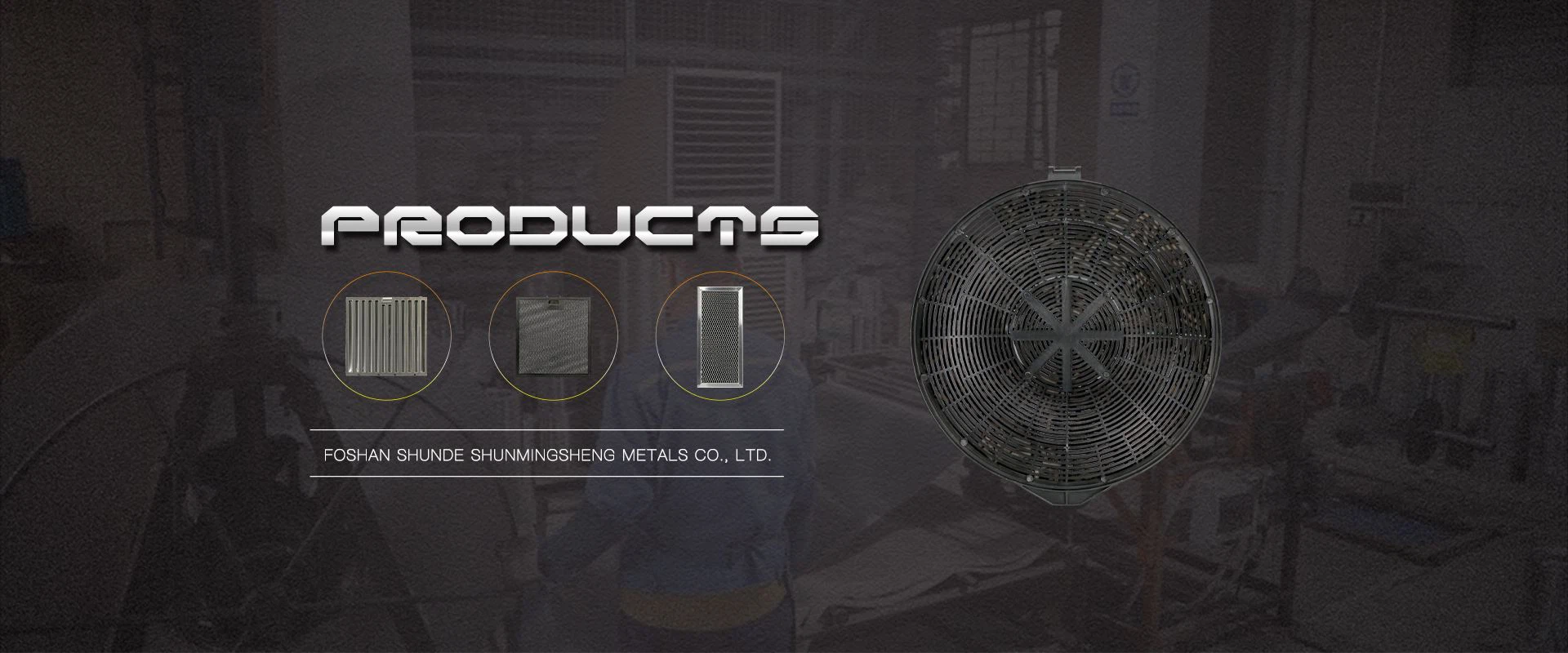
I. Basic Principle of Metal Mesh Filters
Metal mesh filters are primarily composed of multiple layers of metal mesh, usually aluminum or stainless steel, stacked together to form a dense mesh structure. Their main function is to capture and filter grease particles generated during cooking, preventing them from entering the interior of the range hood or being released into the external environment with the airflow.
As air in the kitchen passes through the metal mesh filter, grease particles collide with the surface of the mesh structure due to inertia and become trapped in the fine pores of the metal mesh. This filtration method relies on the fineness of the mesh-the finer the mesh, the more effectively it captures grease particles. However, excessively fine mesh can also increase air resistance, thereby reducing the overall suction power and efficiency of the range hood. Therefore, the design of metal mesh filters needs to balance filtration efficiency with airflow resistance.
II. Design Features of Metal Mesh Filters
The design of metal mesh filters typically revolves around the following key features:
Multi-layer Structure: To enhance grease capture capability, metal mesh filters usually adopt a multi-layered metal mesh structure. The mesh sizes of different layers may vary to optimize grease capture and airflow. This design not only increases the chances of grease particles colliding within the layers but also extends the path of air through the filter, improving filtration efficiency.
Material Selection: Aluminum and stainless steel are the two most commonly used materials in metal mesh filters. Aluminum mesh is lightweight, has good thermal conductivity, and is relatively inexpensive, making it a popular choice for household range hoods. Stainless steel mesh, on the other hand, offers higher corrosion resistance and strength, making it suitable for high-temperature, high-humidity kitchen environments, such as commercial kitchens or range hoods that require continuous operation.
Mesh Density: The density of the mesh directly affects filtration efficiency and airflow resistance. Higher mesh density can more effectively capture fine grease particles but is also more prone to clogging. Therefore, different kitchen environments may require metal mesh filters with different densities.
Cleanability: Metal mesh filters need to be cleaned regularly to maintain their filtration efficiency. The design typically considers ease of cleaning, such as the durability of the mesh structure and the smoothness of the metal surface, to ensure that grease can be easily washed away.
III. Application Range of Metal Mesh Filters
Metal mesh filters are widely used in various types of range hoods, ranging from household appliances to commercial kitchen equipment. Their application can be broadly categorized into the following areas:
Household Range Hoods: In ordinary household kitchens, metal mesh filters are typically used to capture grease produced during daily cooking. Due to the lower usage frequency and grease production in home kitchens, the lightness and cost-effectiveness of aluminum mesh filters make them the choice for most families.
Commercial Kitchens: In commercial kitchens, such as those in restaurants and hotels, cooking frequency is high, and grease production is substantial, requiring more durable and effective metal mesh filters. In these environments, stainless steel filters are commonly used, as they can withstand high temperatures and frequent cleaning while effectively filtering large amounts of grease.
Special Application Scenarios: In environments with higher air quality requirements, such as hospitals, laboratories, or high-end restaurants, more precise metal mesh filters may be used. These filters not only need to capture grease efficiently but may also need to be combined with other types of filtration materials to meet more complex air purification needs.
IV. Maintenance and Care of Metal Mesh Filters
The service life and filtration efficiency of metal mesh filters largely depend on their maintenance and care. Here are some key maintenance recommendations:
Regular Cleaning: Metal mesh filters are prone to clogging with grease, which can reduce the suction power of the range hood. Therefore, it is recommended to clean the filter at least once a month, depending on usage frequency. During cleaning, the filter can be removed and soaked in hot water with a neutral detergent, then gently brushed to remove grease and dirt from the surface. Some metal mesh filters are also dishwasher-safe, but it is important to confirm whether the material is suitable.
Inspecting Filter Condition: During cleaning, the filter should be checked for damage or deformation. If there are noticeable damages to the mesh or if the filter can no longer be effectively cleaned, it should be replaced promptly. Using damaged or severely clogged filters not only reduces the efficiency of the range hood but may also increase the risk of fire.
Proper Installation and Use: Ensure that the filter is correctly installed in the range hood and periodically check that the filter is not loose or dislodged during use. Incorrect installation or improper use can affect the normal operation of the range hood and may result in grease not being effectively captured, thus contaminating the kitchen environment.

