

Hey there! As a HEPA filter supplier, I often get asked a bunch of questions about where our filters can be used. One question that pops up quite a bit is, "Can a HEPA filter be used in a printing press?" Well, let's dive right into this topic and find out.
First off, let's talk about what a HEPA filter actually is. HEPA stands for High - Efficiency Particulate Air. These filters are designed to trap tiny particles in the air, like dust, pollen, mold spores, and even some bacteria and viruses. They're super effective, capable of capturing at least 99.97% of particles that are 0.3 microns in diameter. That's pretty impressive, right?
Now, let's look at the environment of a printing press. Printing presses can be a pretty messy place. During the printing process, a lot of things happen that can generate airborne particles. For example, when the ink is applied to the paper, some of it can atomize and become suspended in the air. There's also paper dust from the sheets being fed through the press. And if there are any finishing processes like cutting or folding, that can create even more dust.
All these airborne particles can cause several problems. For one, they can affect the quality of the prints. If dust or ink particles land on the paper during the printing process, it can create smudges or imperfections. This is a big deal for printers who need to produce high - quality, professional - looking materials.
Another issue is the health of the workers. Breathing in all those particles over time can lead to respiratory problems. It's not just about short - term irritation; long - term exposure can cause more serious health conditions like asthma or chronic obstructive pulmonary disease (COPD).
So, here's where HEPA filters come in. A HEPA filter can be a game - changer in a printing press environment. By installing a HEPA filter system, you can effectively remove those harmful particles from the air. This helps to improve the air quality in the workspace, which is great for the health of the employees. And it also means that the printing process can be more consistent, with fewer print defects.

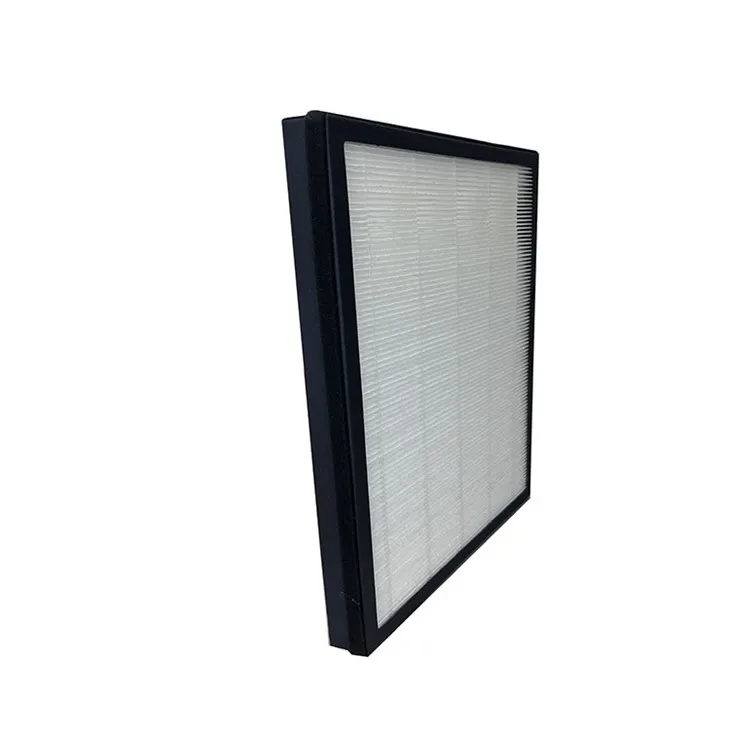
Let's talk about the different types of HEPA filters that could be used in a printing press. One option is the Car HEPA Filter. Now, you might be thinking, "Why a car HEPA filter?" Well, these filters are designed to be compact and efficient, which can be an advantage in a printing press where space might be limited. They're also built to handle a certain level of particulate matter, so they can do a good job of filtering out the dust and ink particles in the air.
Another great option is the Hepa Air Purifier Filter. These filters are specifically designed to clean the air in a room. They usually come with a fan system that draws in the dirty air, passes it through the HEPA filter, and then blows out clean air. In a printing press, you can place these air purifiers strategically around the workspace to ensure that all areas get clean air.
If you need a high - performance filter, the Hepa Filter H13 is a top choice. The H13 rating means that it can capture an even higher percentage of particles, including very small ones. This is ideal for a printing press where you want to get rid of as many particles as possible to ensure the best print quality and air quality.
When it comes to installing a HEPA filter in a printing press, there are a few things to keep in mind. First, you need to make sure that the filter is the right size for the space. A filter that's too small won't be able to handle the volume of air in the printing press area, and it won't be very effective. On the other hand, a filter that's too large can be a waste of money and might not fit properly.
You also need to consider the airflow. The filter should be installed in a way that allows for proper airflow. If the airflow is restricted, the filter won't work as efficiently, and it could even cause the system to overheat.
Maintenance is another important factor. HEPA filters need to be replaced regularly. Over time, the filter will get clogged with particles, and when that happens, it won't be able to filter the air effectively anymore. The frequency of replacement depends on how much the printing press is used and how dirty the air is. But as a general rule, it's a good idea to check the filter every few months and replace it when it starts to look dirty.
In conclusion, yes, a HEPA filter can definitely be used in a printing press, and it has a lot of benefits. It can improve the air quality, protect the health of the workers, and enhance the quality of the prints. If you're a printing press owner or manager, it's definitely worth considering installing a HEPA filter system.
If you're interested in purchasing HEPA filters for your printing press or have any questions about which filter would be the best fit for your needs, feel free to reach out. We're here to help you make the right choice and ensure that your printing press runs smoothly and cleanly.
References
- "Principles of Air Filtration" by some industry expert
- "Health Effects of Airborne Particles in Industrial Settings" from a health research institute