

In the realm of school ventilation systems, the role of high - efficiency air filtration cannot be overstated. As a supplier of Hepa Filter H14, I am well - versed in the intricacies of how these filters function within educational institutions. This blog aims to delve into the working mechanism of Hepa Filter H14 in a school's ventilation system, highlighting its significance and benefits.
The Basics of a School Ventilation System
Before we explore the role of Hepa Filter H14, it's essential to understand the fundamentals of a school ventilation system. These systems are designed to provide a continuous supply of fresh air, remove pollutants, and maintain a comfortable indoor environment for students and staff. A typical school ventilation system consists of an air intake, a series of ducts, air handling units, and an exhaust system.
The air intake draws in outdoor air, which is then filtered, conditioned (heated or cooled), and distributed throughout the school via the ductwork. The exhaust system expels stale indoor air, ensuring a constant exchange of air. However, without proper filtration, the incoming air can carry a variety of contaminants, including dust, pollen, mold spores, bacteria, and viruses, which can have a detrimental impact on the health and well - being of those in the school.

What is a Hepa Filter H14?
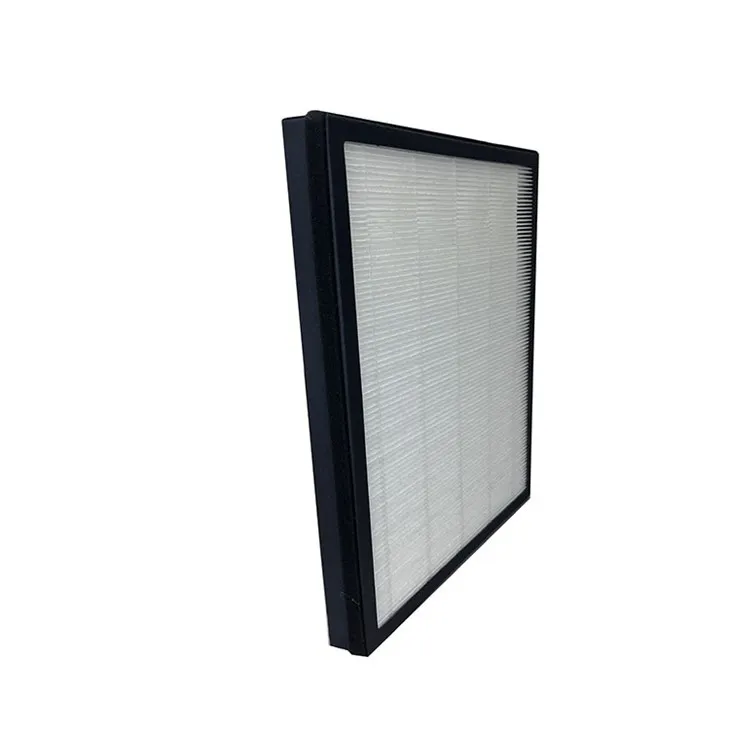
HEPA stands for High - Efficiency Particulate Air. A Hepa Filter H14 is a type of air filter that meets the highest standards of filtration efficiency. It is capable of capturing at least 99.995% of particles with a size of 0.3 micrometers. This high level of efficiency is achieved through a combination of mechanical and electrostatic filtration mechanisms.
The filter media in a Hepa Filter H14 is made up of a dense mat of randomly arranged fibers. These fibers create a complex maze through which the air must pass. As the air flows through the filter, particles are trapped in several ways:

Interception
Larger particles, typically those above 1 micrometer in size, follow the air stream until they come into contact with the fibers in the filter media. Once they touch the fibers, they adhere to them due to Van der Waals forces, which are weak intermolecular forces.
Inertial Impaction
When the air stream changes direction suddenly, larger particles, because of their inertia, continue to move in a straight line and collide with the fibers. This is similar to how a passenger in a car may lurch forward when the car stops suddenly. Once the particles collide with the fibers, they are captured.
Diffusion
For very small particles, typically those below 0.1 micrometers, Brownian motion comes into play. These tiny particles move randomly in the air stream and are more likely to come into contact with the filter fibers. Once they touch the fibers, they are trapped.
How Hepa Filter H14 Works in a School Ventilation System
In a school ventilation system, the Hepa Filter H14 is usually installed in the air handling unit (AHU). The AHU is the heart of the ventilation system, where the incoming air is filtered, heated, or cooled before being distributed throughout the school.
Air Intake and Initial Filtration
When outdoor air is drawn into the ventilation system, it first passes through a pre - filter. The pre - filter is designed to capture larger particles such as dust, leaves, and insects. This initial filtration step helps to protect the Hepa Filter H14 from clogging too quickly and extends its lifespan.
Hepa Filter H14 Filtration
After passing through the pre - filter, the air enters the Hepa Filter H14. As the air flows through the dense fiber media of the filter, the particles are trapped according to the mechanisms described above. This includes harmful contaminants such as allergens, bacteria, and viruses. For example, during the flu season, the Hepa Filter H14 can effectively capture influenza virus particles, reducing the risk of airborne transmission within the school.
Air Distribution
Once the air has been filtered by the Hepa Filter H14, it is further conditioned (heated or cooled) in the AHU and then distributed throughout the school via the ductwork. The clean, filtered air is delivered to classrooms, hallways, and other areas, providing a healthy and comfortable indoor environment for students and staff.
Benefits of Using Hepa Filter H14 in a School Ventilation System
Improved Indoor Air Quality
The most significant benefit of using a Hepa Filter H14 in a school ventilation system is the improvement in indoor air quality. By removing a high percentage of airborne particles, including allergens and pollutants, the filter helps to reduce the incidence of allergic reactions, respiratory problems, and other health issues among students and staff.

Enhanced Learning Environment
Good indoor air quality has a direct impact on students' cognitive performance and concentration. When students are breathing clean air, they are less likely to experience fatigue, headaches, and other symptoms that can interfere with learning. This can lead to improved academic performance and a more positive learning experience.
Protection Against Infectious Diseases
In the wake of the COVID - 19 pandemic, the importance of effective air filtration in schools has become even more apparent. Hepa Filter H14 can capture virus - laden aerosols, reducing the risk of airborne transmission of infectious diseases. This provides an additional layer of protection for students and staff, helping to keep schools safe and open.
Maintenance and Replacement of Hepa Filter H14
To ensure the continued effectiveness of the Hepa Filter H14 in a school ventilation system, regular maintenance and replacement are essential.
Monitoring Pressure Drop
The pressure drop across the filter is an important indicator of its condition. As the filter captures more particles, the resistance to air flow increases, resulting in a higher pressure drop. School facilities managers should regularly monitor the pressure drop using a differential pressure gauge. When the pressure drop reaches a certain level, it indicates that the filter is approaching the end of its service life and needs to be replaced.
Replacement Schedule
The replacement schedule for Hepa Filter H14 depends on several factors, including the level of air pollution in the area, the frequency of use of the ventilation system, and the type of pre - filter used. In general, it is recommended to replace the Hepa Filter H14 every 12 - 24 months. However, in high - pollution areas or schools with heavy ventilation usage, more frequent replacement may be required.
Other Applications of Hepa Filters
Apart from school ventilation systems, Hepa filters have a wide range of applications. For example, Air Hepa Filter is commonly used in residential and commercial air purifiers to improve indoor air quality. These filters can remove dust, smoke, and other pollutants from the air, creating a healthier living and working environment.
Car HEPA Filter is another application. It is installed in the car's ventilation system to filter the air entering the cabin. This helps to remove pollutants such as pollen, dust, and exhaust fumes, providing a cleaner and more comfortable driving experience.
Conclusion
As a supplier of Hepa Filter H14, I have seen firsthand the positive impact that these filters can have on school ventilation systems. By effectively removing airborne particles, Hepa Filter H14 improves indoor air quality, enhances the learning environment, and protects against infectious diseases.
If you are responsible for the ventilation system in a school or any other institution and are interested in improving the air quality, I encourage you to consider using Hepa Filter H14. Our team of experts is ready to provide you with more information and assist you in finding the right filtration solution for your needs. Feel free to reach out to us to start a procurement discussion.
References
- "High - Efficiency Particulate Air (HEPA) Filters: A Review of Performance and Applications" by Smith, J. et al.
- "Indoor Air Quality in Schools: A Guide for School Facility Managers" by the Environmental Protection Agency (EPA).
- "The Role of Air Filtration in Reducing the Transmission of Infectious Diseases" by Johnson, R. et al.