

Hey there! As a supplier of stainless steel filters, I've seen firsthand how these nifty gadgets play a super important role in the oil and gas industry. In this blog, I'm gonna break down the specific applications of stainless steel filters in this sector.
Separating Solid Particles
One of the most common uses of stainless steel filters in the oil and gas industry is to separate solid particles from fluids. During the extraction and production processes, oil and gas often contain various impurities like sand, rust, and other solid debris. These particles can cause serious damage to equipment such as pumps, valves, and pipelines if not removed.
Stainless steel filters, especially the Stainless Steel Filtration Mesh, are designed with precise pore sizes. They can effectively trap these solid particles while allowing the oil or gas to pass through. For example, in offshore oil rigs, where the oil is pumped from the seabed, the raw oil is full of sand and sediment. A well - designed stainless steel filtration mesh can be installed at the intake of the pumping system. This way, it prevents the sand from entering the pumps and causing wear and tear, which could lead to costly breakdowns and maintenance.
Removing Contaminants from Gas Streams
In the gas processing part of the oil and gas industry, stainless steel filters are crucial for removing contaminants from gas streams. Natural gas, when it comes out of the ground, may contain water vapor, sulfur compounds, and other impurities. These contaminants not only affect the quality of the gas but can also be corrosive to the equipment.
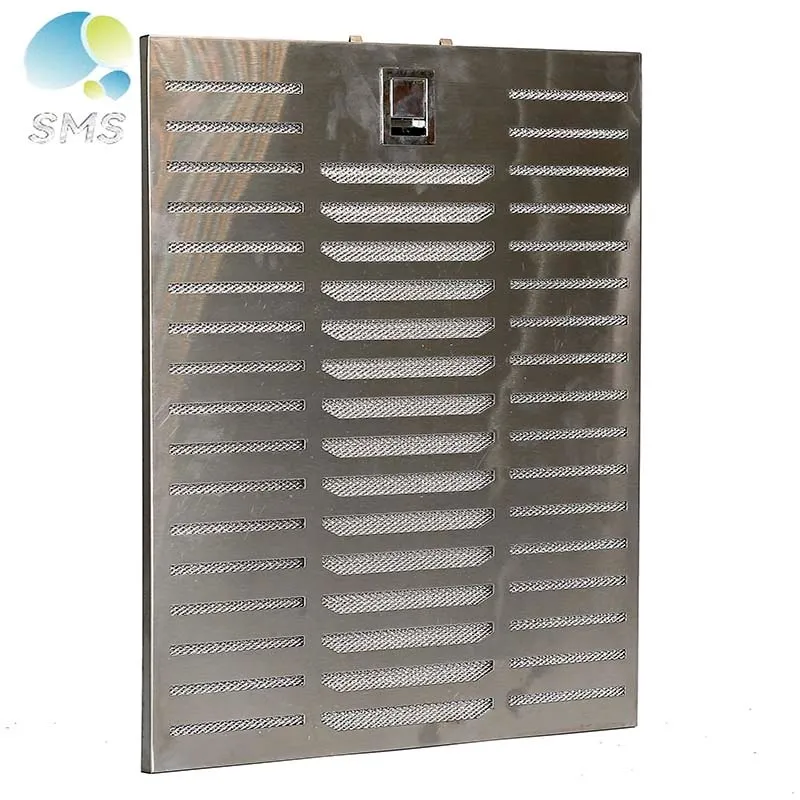
The Hood Baffle Filter is a great option for this task. It uses a baffle design to force the gas to change direction multiple times. As the gas moves through the filter, the heavier contaminants, like water droplets and solid particles, are separated from the gas stream due to inertia. The stainless steel construction of the hood baffle filter makes it resistant to corrosion, which is essential since the gas may contain corrosive substances. This ensures a long - lasting and efficient filtration process, keeping the gas clean and protecting the downstream equipment.
Protecting Catalysts in Refineries
Refineries play a key role in the oil and gas industry, where crude oil is processed into various products. Catalysts are used in many refining processes to speed up chemical reactions. However, these catalysts can be easily poisoned by contaminants in the feedstock.
Stainless steel filters, such as the sintered stainless steel filter, are used to protect these catalysts. Sintered stainless steel filters are made by compacting and heating stainless steel powder particles together. This creates a porous structure with high strength and excellent filtration efficiency. Before the feedstock enters the catalytic reactors, it passes through these sintered filters. The filters trap any solid or liquid contaminants that could potentially deactivate the catalysts. By doing so, they help maintain the efficiency of the refining process and reduce the need for frequent catalyst replacement, which can be quite expensive.
Ensuring Product Quality
In the oil and gas industry, product quality is of utmost importance. Whether it's gasoline, diesel, or natural gas, consumers expect a certain level of purity and performance. Stainless steel filters are used at various stages of the production and distribution process to ensure that the final products meet the required standards.

For example, in the production of lubricating oils, stainless steel filters are used to remove any remaining impurities after the refining process. This ensures that the lubricating oil has the right viscosity and performance characteristics. In the case of natural gas for domestic use, filters are used to remove any remaining odorants or contaminants before it is distributed to homes. This guarantees a clean and safe energy source for consumers.
Improving Operational Efficiency
By using stainless steel filters, the oil and gas industry can significantly improve its operational efficiency. As mentioned earlier, filters protect equipment from damage caused by contaminants. This reduces the frequency of equipment breakdowns and maintenance, which in turn leads to less downtime.
Moreover, clean fluids and gases flow more smoothly through the pipelines and equipment. This means that pumps and compressors don't have to work as hard, resulting in energy savings. For example, a well - filtered oil stream will require less energy to pump through a pipeline compared to an unfiltered stream with a lot of solid particles.
Meeting Environmental Regulations
The oil and gas industry is subject to strict environmental regulations. These regulations aim to reduce the impact of the industry on the environment, such as limiting the release of pollutants into the air and water. Stainless steel filters play an important role in helping the industry meet these regulations.
For example, filters are used to remove sulfur compounds from natural gas before it is burned. Sulfur compounds, when burned, produce sulfur dioxide, which is a major air pollutant. By removing these compounds using stainless steel filters, the industry can reduce its sulfur dioxide emissions and comply with air quality regulations.
In addition, filters are also used to treat wastewater generated during the oil and gas production process. The treated water can then be safely discharged or reused, reducing the industry's water footprint.
Cost - Effectiveness
Stainless steel filters are a cost - effective solution in the long run. Although the initial investment in high - quality stainless steel filters may be higher compared to some other types of filters, their durability and performance make them a great choice.
Stainless steel is resistant to corrosion, which means that the filters have a long service life. They don't need to be replaced as often as other materials, reducing the overall cost of filtration over time. Also, as they protect the equipment from damage and improve operational efficiency, they help save money on maintenance and energy costs.
Conclusion
In conclusion, stainless steel filters are an essential part of the oil and gas industry. From separating solid particles and removing contaminants from gas streams to protecting catalysts and ensuring product quality, they play a wide range of important roles. They also help improve operational efficiency, meet environmental regulations, and offer cost - effectiveness.
If you're in the oil and gas industry and looking for reliable stainless steel filters, we've got you covered. Our filters are designed with the latest technology and high - quality materials to meet your specific needs. Whether it's a Stainless Steel Filtration Mesh, Hood Baffle Filter, or sintered stainless steel filter, we can provide you with the best solutions. Don't hesitate to contact us for more information and to start a procurement discussion. Let's work together to keep your operations running smoothly and efficiently.
References
- "Handbook of Filtration Technology in the Oil and Gas Industry"
- "Principles of Gas Processing and Filtration"
- "Stainless Steel Applications in Industrial Filtration"