

As a supplier of Hepa Filter H13, I am often asked about the edge seal material used in these high - efficiency particulate air filters. In this blog, I'll delve into the details of the edge seal material of Hepa Filter H13, its importance, types, and how it contributes to the overall performance of the filter.
The Importance of Edge Seal Material in Hepa Filter H13
Hepa Filter H13 is renowned for its ability to capture at least 99.95% of particles that are 0.3 microns in size. However, the effectiveness of a Hepa Filter H13 doesn't solely depend on the filter media itself. The edge seal material plays a crucial role in ensuring that the air passing through the filter is properly filtered and that there is no bypass of unfiltered air around the edges of the filter.
A well - designed and high - quality edge seal material prevents air leakage, which could significantly reduce the filter's efficiency. If air can easily flow around the edges of the filter rather than through the filter media, particles that should be trapped by the filter will pass through, compromising the air quality in the environment where the filter is installed.

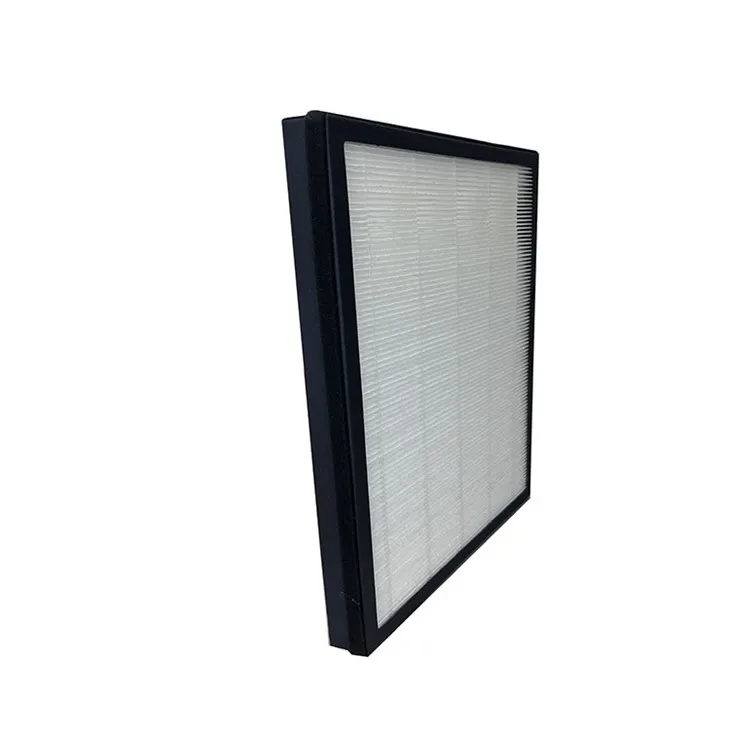
Types of Edge Seal Materials for Hepa Filter H13
Polyurethane (PU)
Polyurethane is one of the most commonly used edge seal materials for Hepa Filter H13. It offers several advantages. Firstly, it has excellent adhesion properties. When applied to the filter frame and media, it forms a strong bond that can withstand various environmental conditions, including temperature and humidity changes. This ensures that the seal remains intact over time, reducing the risk of air leakage.
Secondly, polyurethane is a flexible material. This flexibility allows it to conform to the shape of the filter frame and media, providing a tight and uniform seal. It can also absorb minor vibrations and shocks, which is beneficial in applications where the filter may be subject to movement, such as in Car HEPA Filter systems.
In addition, polyurethane has good chemical resistance. It can resist the effects of many common chemicals and solvents, which is important in industrial and commercial environments where the filter may be exposed to various contaminants.
Silicone
Silicone is another popular choice for edge seal material. It has outstanding temperature resistance. Silicone can maintain its sealing properties over a wide range of temperatures, from extremely low to very high temperatures. This makes it suitable for applications in environments with extreme temperature variations, such as in some industrial ovens or cold storage facilities.
Silicone also has excellent flexibility and elasticity. It can easily adapt to changes in the shape of the filter due to thermal expansion or contraction. Moreover, it is resistant to aging and weathering, ensuring a long - lasting seal. Silicone is also non - toxic and odorless, which is an important consideration in applications where air quality is of high concern, such as in hospitals and cleanrooms.
Epoxy Resin
Epoxy resin is known for its high strength and durability. It forms a very rigid and hard seal when cured. This makes it suitable for applications where the filter needs to withstand high - pressure differentials. In some industrial ventilation systems, the air pressure across the filter can be quite significant, and an epoxy resin edge seal can ensure that the filter remains intact and the seal is maintained.
Epoxy resin also has good chemical resistance and adhesion properties. It can bond well with both the filter media and the frame, providing a reliable seal. However, its rigidity may be a drawback in some applications where the filter needs to be flexible or where there are significant vibrations.
Factors Affecting the Choice of Edge Seal Material
Application Environment
The environment in which the Hepa Filter H13 will be used is a major factor in choosing the edge seal material. For example, in a high - temperature environment, silicone or a high - temperature - resistant polyurethane may be the best choice. In a chemically aggressive environment, a material with good chemical resistance, such as epoxy resin or a specific type of polyurethane, should be selected.
Filter Design and Construction
The design of the filter, including the type of frame and media, can also influence the choice of edge seal material. Some filter designs may require a more flexible seal to accommodate the movement of the media, while others may need a rigid seal to withstand high pressures.
Cost
Cost is always a consideration in any manufacturing or purchasing decision. Polyurethane is generally more cost - effective compared to silicone and epoxy resin in many cases. However, the long - term performance and reliability of the seal should also be taken into account when evaluating the cost. A more expensive but higher - quality edge seal material may result in lower maintenance costs and longer filter life in the long run.
The Role of Edge Seal Material in Different Applications
Cleanrooms
In cleanrooms, where the air quality needs to be maintained at an extremely high level, the edge seal material of Hepa Filter H13 is of utmost importance. Any air leakage around the edges of the filter can introduce contaminants into the cleanroom environment, which can have a significant impact on the manufacturing processes or research activities taking place. Silicone or a high - quality polyurethane edge seal is often used in cleanroom applications due to their excellent sealing properties and resistance to contaminants.
HVAC Systems
In heating, ventilation, and air - conditioning (HVAC) systems, the edge seal material helps to ensure the efficient operation of the system. A good seal reduces the amount of unfiltered air that bypasses the filter, which in turn improves the overall air quality in the building. Polyurethane is commonly used in HVAC applications due to its cost - effectiveness and good performance under normal operating conditions.
Industrial Processes
Industrial processes often generate a large amount of dust and contaminants. Hepa Filter H13 with a proper edge seal material can effectively capture these particles and prevent them from being released into the environment. Epoxy resin may be preferred in some industrial applications where the filter needs to withstand high pressures and chemical exposure.
Conclusion
The edge seal material of Hepa Filter H13 is a critical component that significantly affects the filter's performance and efficiency. Whether it's polyurethane, silicone, or epoxy resin, each type of edge seal material has its own unique properties and advantages, and the choice depends on various factors such as the application environment, filter design, and cost.
As a supplier of Hepa Filter H13, we understand the importance of using the right edge seal material to ensure the quality of our filters. We are committed to providing high - quality Hepa Filter H13 with reliable edge seals to meet the diverse needs of our customers.
If you are interested in purchasing Hepa Filter H13 for your specific application, we invite you to contact us for a detailed discussion. Our team of experts can help you choose the most suitable filter with the appropriate edge seal material based on your requirements.
References
- "High - Efficiency Particulate Air (HEPA) Filters: Principles, Design, and Applications" - A technical handbook on HEPA filters.
- "Materials Science for Filtration Applications" - A comprehensive resource on materials used in filtration, including edge seal materials.
- Industry standards and guidelines related to the manufacturing and performance of Hepa Filter H13.